410 to 866 CE
North
Eastern Yorkshire and the wider political interest of Northumbria during the
period from the fall of the Roman Empire to the early Scandinavian Raids
leading to their eventual control of the northern part of the Anglo-Saxon world
from York
|
Return to the Home Page of the Farndale Family
Website |
The story of one family’s journey through two
thousand years of British History |
The 83 family lines into which the family is divided.
Meet the whole family and how the wider family is related |
Members of the historical family ordered by date of
birth |
Links to other pages with historical research and
related material |
The story of the Bakers of Highfields, the Chapmans, and
other related families |
Dates are in red.
Headlines and
Northumbrian kings are in brown.
The
wider context beyond Northumbria is in purple.
Hyperlinks to
other pages are in dark
blue.
References and
citations are in turquoise.
Geographical
context is in green.
|
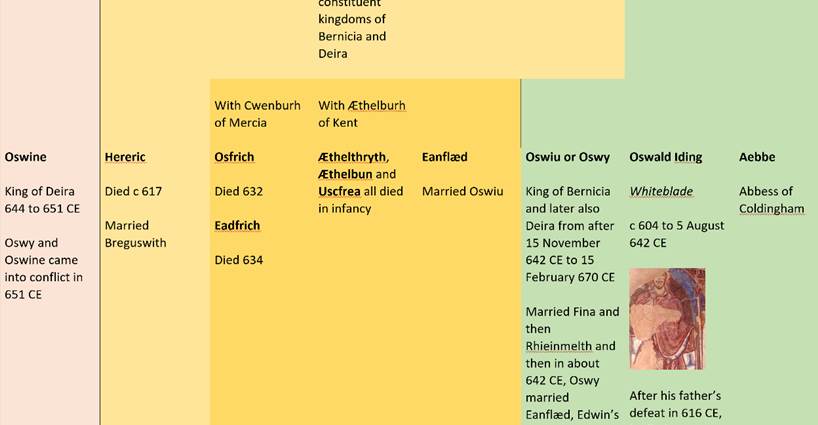
The Genealogy of the Kingdoms of Deira,
Bernia and Northumbria
The Family Tree of the Kings
of Deira and Bernicia and their merger into the Kingdom of Northumbria |
|
The vicinity of Farndale in the Anglo Saxon period
400 CE
to 794 CE |
Go back to Roman Yorkshire.
Introduction and
summary of sources
The Early Medieval Period is
generally taken to cover the period from c 410 to 1066. This was the period
once misguidedly referred to as the Dark Ages. This page focuses on Anglo-Saxon
Northumbria and particular the lands of northern Yorkshire centred on the North
York Moors during the first half of the Early Medieval Period prior to 866 CE.
After 866 CE, these lands were the heart of the Scandinavian territory that
came to be known as the Danegeld and this later period will be the subject of Scandinavian Yorkshire.
Bede’s Ecclesiastical
History is the primary source for the
history of this period, and itself relies on Gildas’ Ruin of
Britain, probably written in the sixth
century CE, more a sermon about the end of times than a history, whose didactic
approach may have also rubbed off on Bede. Bede’s work was intended to share his
view of the rise of the church in English history and he adopted distinct views
about the failures of the indigenous Britons, the inevitability of Roman
Christianity, but with some respect for the Irish Christians. The Ecclesiastical
History nevertheless provides a historical narrative which is invaluable in
being the only early medieval primary source. The much later and more southern
focused Anglo Saxon Chronology, begun in the ninth century,
is a later source which includes a chronology of the earlier period, and may
have relied on other earlier sources not used by Bede.
Gildas’ work was more an
admonition to the leaders of his day than a history and little is known of
Gildas. He saw the violence of the fifth century as divine punishment for the
violation of the commandments by the elite. He probably wrote De Excidio Britanniae, the Ruin of Britain in the
second quarter of the sixth century, about 540 CE. Albeit weighted to his doom
laden message, the work provides a near contemporary record of events. Gildas
was concerned primarily to condemn contemporary British secular and religious
society, but he leaves no doubt that the Britons experienced severe trauma at
the hands of Germanic peoples settled in Britain (The Earliest English Kings, D P Kirby, 2000, page 14).
The Anglo Saxon
Chronicle is a collection of Old English
annals initiated around 890 CE, probably under King Alfred the Great, providing
a year-by-year history of England from Roman times to 1154. It includes the
Anglo-Saxon settlement, important events in Northumbrian history, genealogies,
and Scandinavian invasions.
Other later sources
complete the contemporary or near contemporary written record. Bede’s other
works supplement the Ecclesiastical History. They include his scientific
works on the reckoning of time, astronomy, the tides and the calculation of
Easter; his works on grammar and poetry; his works on theology; and his Letter
to Egbert just before his death in 734 CE. The letters of Sidonius Apollinaris (c 431 to 487) comprise nine
books and approximately 150 letters including Book 8 Letter 6 which describes the arrival of Saxon pirates.
Stephanus’s Vita
Sancti Wilfrithi, written
between 709 and 720 CE is a hagiographical account of the life of Wilfrid. The Anonymous Life of Ceolfrith details the abbot of Monkwearmouth-Jarrow,
Ceolfrith's trip to Rome and the creation of the Codex Amiatinus. The Letters of Alcuin of York, c AD 732 to
804 provide an
important record of the period immediately prior to the Viking attacks from 793
CE. Historia
Brittonum,
traditionally attributed to the ninth century Welsh monk Nennius, is a
compilation blending history, legend, and geography which records Britain's origins,
Roman rule, and battles against Saxons. It is a romanticised emphasis on
British and Arthurian, rather than Anglo-Saxon, history. Asser’s Life of King Alfred
is a hagiographical account of the Life of Alfred of Wessex, his confrontations
with Scandinavian invaders and his promotion of intellectual work. The Chronicle of Æthelweard
is a late tenth
century Latin history of England primarily based on a version of the
Anglo-Saxon Chronicle that is now lost. Symeon of Durham’s Historia
Regum is a twelfth
century Latin chronicle detailing English and Northumbrian history from 735 to
1129. Compiled at Durham Priory, it preserves unique early Northumbrian annals,
copies of works by Asser and Florence of Worcester, and contains original, contemporary
accounts of Northern English events. Historia Anglorum
by Henry of Huntingdon, written around 1123–1154, is a 12th-century Latin
chronicle tracing English history from Julius Caesar’s invasion to the
accession of Henry II in 1154. William of Malmesbury's Gesta Regum Anglorum,
completed around 1125–1127, is a foundational twelfth century chronicle
covering English history from 449 to 1120. It provides detailed accounts of
Anglo-Saxon kings, bridging the gap between Bede and contemporary medieval
history with a focus on moral judgments and political commentary. Roger of
Wendover's Flores Historiarum
is a thirteenth century Latin chronicle covering English and a gloss on world
history to 1235.
There is a bibliography, including
secondary sources, at the bottom of this webpage.
The Old English æ is known as ash, and
represents the unrounded vowel sound in Anglo-Saxon languages, pronounced as
the a in cat. Æthel means noble, so Æthelstan means noble
stone, Ælfred means Elven or supernatural counsel and Æthelfrith,
somewhat ironically, means noble peace.
Emergence from the chaos
410 CE
The Roman Empire had both
required and created surpluses. When the empire withdrew from Britain, its economy
collapsed. There were no interlinked markets, no taxes, no money, no mass
production of goods. People were on the move. They often moved into the ruins
of former Roman settlements, or to ancient hillforts haunted by the ghosts of
ancestors. A community continued to live at Birdoswald, a second century fort on
Hadrian’s Wall. Roman soldiers had married local girls and local boys had been recruited
to its defence. A hybrid community continued to live there over time and by c
470 CE they dismantled the old Roman walls and built new structures and in time
an impressive timber hall. There emerged a series of small scale,
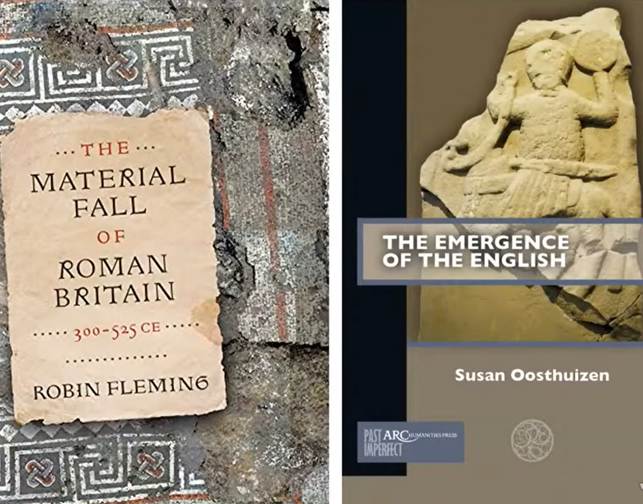
politically independent, socially stratified little worlds. (Britain after Rome, The Fall and Rise,
400 to 1070, 2011, Robin Fleming page 31 to 39, see also Northumbria AD 367-867,
Max Adams and Colm O’Brien, 2025, page 17). If local territorial
lordship developed in some of the Wall forts, similar types of evidence, albeit
fragmented, can also be found elsewhere (Northumbria
AD 367-867, Max Adams and Colm O’Brien,
2025, page 22).
Under the late Roman Empire, taxes
had come to be rendered in kind as the iugum, a render of labour and
goods, and came to be consumed locally rather than exported to Rome and the
northern defence along Hadrian’s Wall came to be provided locally by
frontiersmen (Northumbria AD
367-867, Max Adams and Colm O’Brien,
2025, page 16).
As Britain was abandoned
by the Roman army, the remaining population was subject to direct attacks from
the barbarian lands. The threat came primarily from the Picts and Scots to the
north and west, but also from the Saxons who were the primary threat to
southern and eastern Britain. The social chaos unleashed in the wake of the
revolt, the hordes of displaced and vulnerable people, made the former province
a perfect hunting ground for invaders in search of treasure, cattle or slaves
(The Anglo Saxons, A History of the Beginnings
of England,
Marc Morris, 2021, page 23).
In 455 CE a Gallo Romano
aristocratic poet, Sidonius Apollinarius, referred to the Saxon
pirate, who deems it sport to furrow in British waters with hides, cleaving the
blue sea in a stitched boat. He later added that the Saxon is the most
ferocious of all foes. He comes upon you without warning; when you expect his attack
he slips away. Resistance only moves him with contempt; a rash opponent is soon
down. Shipwrecks are to him no terror but only so much training. His is no mere
acquaintance with the perils of the sea; he knows them as he knows himself.
(Epistulae 8.6, Sidonius Apollinaris).
The barbarians push us to the sea;
the sea pushes us back on the barbarians. Between these two kinds of death, we are
either drowned or slaughtered (Gildas, the Ruin of Britain,
section
20).
The pagan practices of the Saxons
terrified the indigenous Britons. Their reputed practice was to abandon every
tenth captive to the sea in a ritual sacrifice on their return home (Epistulae
8.6, Sidonius Apollinaris).
Bede’s Ecclesiastical History
covers the fifth century and sixth
centuries CE in a relatively brief account (Ecclesiastical
History, Bede, Book 1, Chapter 12 to 23).
A Germanic maritime tradition is evidenced by the ship’s figurehead from the River Scheldt near
Apels, Belgium, dating to the late fourth century, which features an animal
head, attached to a long, lattice-worked stem, representing early Germanic or
Roman-influenced maritime art. Whilst no boat was found with it, the find suggests
river trade and shipbuilding styles in the Low Countries, and might indicate
Germanic maritime activity. It is now housed in the British Museum. The Nydam ship is an important archaeological
find from the Iron Age, which dates to c 310 to 320 CE, preserved in a Danish
bog and considered the oldest known clinker-built vessel from Northern Europe.
We therefore have to temper
the evidence of Gildas and Bede with the archaeological evidence, which
suggests a more subtle transition.
429 CE
In these early days, in c 429 CE
the Gaulish bishop Germanus quashed the heresy known as Pelagianism amongst the
British Christians. Pelagius was an austere and ascetic British monk and
theologian who had appeared in Rome in about 380 CE. Garmanus’ mission was an
early attempt by Rome to impose its authority on the British church. The records of this visit provide an early
insight into immediate post Roman British society.
Bede had contempt for the
indigenous folk of Britain at this time. To other unspeakable crimes, which Gildas
their own historian describes in doleful words, was added this crime, that they
never preached the faith to the Saxons or the Angles who inhabited Britain with
them (Ecclesiastical History, Bede, Book 1, Chapter 22). Perhaps a little unfair on an
indigenous population who had more immediate concerns for their survival.
There were still some leaders in
Britain who attempted to uphold public authority.
At about this time, in about the
430s, the Britons were reputed to have made their disastrous invitation to the
Germanic warbands to protect them against the Pictish and Irish threat in
return for possession of the Isle of Thanet, when according to Bede, Vortigern,
leader of the British tribal councils, made a pact with the Jutish Hengest and
Horsa. The legend has it that the Saxons sent three ships, an apocryphal
formula which was well used. Vortigern means high ruler, and Hengest and
Horsa means gelding and horse. The story was almost certainly
fictional, but it was not unlikely that the British leaders sought help from
mercenaries. That is exactly what the Romans had done for centuries. The story
was recorded three centuries later by Bede (Ecclesiastical
History, Bede, Book 1, Chapter 15, but also in about the sixth century by Gildas in the Ruin of Britain,
section 23).
The Kentish Chronicle, cited by
Nennius, Chronographer, dated Vortigern’s leadership to 452 CE (Historia
Brittonum commonly attributed to
Nennius, page
147, 161,
162).
c 430
CE
Bede dated these events to
449 CE. It is more likely that the first arrivals of this wave of Saxon
mercenaries occurred in about 430 CE when the earliest archaeological records
provide indications of Saxon settlement including burials, artefacts and
buildings of a style unfamiliar in late Roman Britain. The Saxon Revolt (their
reneging on the deal) may have occurred in about 441 CE when the Gallic
Chronicle recorded that the Britons, up to now afflicted by various
disasters and vicissitudes, were widely reduced to the rule of the Saxons (The
Anglo Saxons, A History of the Beginnings of England, Marc Morris, 2021, page 29, the Gallic
Chronicle, 452 CE).
431 CE
Pope Celestine sent
Palladius to Ireland as its first bishop.
Cremations of the dead had not been
practised by the Britons since the third century CE, but was practised by the
Saxons. The body was burned on a pyre, often with animal, and the ashes buried in
an urn. From 430 CE this practice appeared in Britain, including at Spong Hill,
Norfolk. British examples appear generally to the north in the areas of the
Wash and the Humber.
The inclusion of grave
goods was also practised in Saxony since about 400 CE and appeared in
Britain a generation later. British examples appeared more widely, but brooches
and decorated metalwork dominated to the north, whilst the Quoit Brooch style,
of Romano British origin, appeared in the south.
Goods started to appear in
the archaeology from the Continent. The Castle Eden glass claw beaker from county Durham is a rare and
exceptionally well-preserved Anglo-Saxon drinking vessel, likely produced in
the Rhineland region of modern Germany during the fifth to seventh centuries
CE. It is a highly significant object that indicates the high status of its
original owner and the extensive trade networks of the time. The saucer form of brooches dominated the southern parts of
Britain and were associated with areas of modern Germany and the Rhineland. The
cruciform style of brooch dominated in eastern and northern
Britain and is associated with northern German and modern Denmark (Anglia and
Juteland) and coastal Scandinavia (Sweden and Norway).
The square headed brooch from West Heslerton dating to the
late fifth century; the sixth century bow brooches from Maltby in Cleveland;
and the seventh century gold sleeve fastener with its garnet inlay from Boldon,
Tyne and Wear in the collection of the Society of Antiquaries of Newcastle
upon Tyne, evidence a new ornate Germanic influence.
Archaeologists tend to
describe the new styles of decoration as geometric (adopting geometric
shaped chipped into metal) and zoomorphic (reflecting the form of
animals). These forms had been very popular in the Germanic part of the empire,
perhaps from 200 CE onwards. Brooches, belt buckles, horse harnesses and other
objects adopted these kinds of decorations. Such styles are also reflected in the
Roman era hoard at Traprain Law. Their earliest origins were across the steppes
of Asia during the Bronze Age and they swept into the Germanic areas and
Scandinavia. From late fifth and early sixth centuries, such decoration
appeared in the Yorkshire region.
Early Anglo-Saxon art is
renowned for its intricate serpent and beast motifs, in the Germanic zoomorphic
style (Decoding Anglo-Saxon art, British Museum). These designs, often
found on high-status metalwork, are characterised by elaborate interlace and
stylised animal forms, such as those seen in the famous treasures from the Sutton Hoo ship burial. Such forms were
later adapted into Christian decoration.
A narrative history for the
lands north of the Humber is almost non existent before the end of the sixth
century, by which time warlord dynasties bearing native British or Germanic
names, speaking a novel language, were vying for control of a politically
unrecognisable landscape of petty kingdoms. By then Britain no longer had any
functioning urban centres; no civil service or state functionaries; no currency
aside from recycled Roman coins; no market economy and barely any relations
with continental Europe. The lost stratigraphic phases of building, streets and
offences in Britain’s Roman towns are often found to be covered by a thick
layer of what is called, enigmatically but literally, ‘dark earth’: their apparently
deserted streets and buildings became the back filled graves of an empire. Nevertheless the archaeological
record does not provide significant evidence of destruction of forts, vici
and colonia, but rather suggests a process of gradual abandonment from
the mid to late fourth century CE. The archaeology tells a different stories to
such sources as Gildas’ Ruin of Britain. The peoples of the lands
north the Humber endured; they adapted. They still raised cattle, grew cereals
and vegetables; forged decorative arts and weapons; spun and wove cloth; buried
their dead; explored new means of expression and identity that were nevertheless
rooted in the deep, sometimes mythic past. They farmed with pragmatism but with
an eye to the caprices of their gods. They glorified warfare and treasure in an
imaginative world full of warrior heroes and vengeful smiths, dragons and
fantastical creatures. They knew who they were, and who they were not. They
venerated their ancestors and generally treated their dead with reverence,
sometimes with fear. (Northumbria AD 367-867, Max Adams and Colm O’Brien, 2025, page 10).
The archaeological finds further
north tended to reveal a closer affinity with the Saxon homelands. This
suggests that the provincial administration of Roman times may have continued
to some extent.
The archaeology suggests
new settlements were focused primarily along the course of old Roman roads.
They tended to be clustered around, but generally not within, old Roman towns.
They were also more focused towards the east.
So whilst the traditional
view of historians was that the Saxon immigrants replaced the indigenous population,
following Gildas’ suggestion that the British folk were killed or enslaved, by
the 1960s there were doubts about the scale of the Saxon migrations. An idea
emerged that Britain was invaded by a few Saxons who were disproportionately
powerful. An alternative interpretation of a more sizeable population of
Germanic migrants to Britain rests on the adoption of English, a Germanic
language and of Germanic cultural practices. Whilst the French weekdays derive
from the names of Roman Gods, English days of the week are named after Germanic
Gods, Tiw or Tyr, Woden, Thunor and Frig.
It may just be however
that Britain had been ravaged so badly leading to cultural collapse that there
was little to preserve of their former culture. The elite transfer model
suggests the adoption over time of the culture of large numbers of immigrants,
so that archaeological excavations may be those of Britons who had adopted the incoming
culture. It would have taken a lot of ships to land a sizeable Germanic
population in Britain. Sidonius Apollinaris when writing of the Saxon
pirates, spoke of single boats stitched together from animal skins rather than
menacing fleets, where every man acted as both captain and crew (Epistulae 8.6, Sidonius Apollinaris). Yet over decades there may
have been significant numbers of Germanic and Scandinavian immigrants settling
along the east coast. The numbers are likely to have been large for the
Germanic language English to have become the established tongue. (The
Anglo Saxons, A History of the Beginnings of England,
Marc Morris, 2021, page 34).
The immigrants sought
farming land. This does not seem to have been a single and dramatic event, an
invasion, but rather a long historical process. A small number of these incomers
may well have been recruited as mercenaries by more organised Romano-British
groups. Hoards of this period may sometimes have simply reflected the
consequences of sudden economic collapse, rather than the sudden invasion of
Saxons. (Britain
after Rome, The Fall and Rise, 400 to 1070,
2011, Robin Fleming page 40).
This diverse population of
immigrants perhaps focused on the regions around Friesland and the mouth of
the Elbe (The English, 1994, Professor
Geoffrey Elton) introduced the ancestor of the
English language which would, in time, become the dominant world language.
North of the Humber, the
Saxon migration was much thinner. Indeed Bede recorded that there were three
powerful tribes, the Saxons, Angles and Jutes. His model suggested that the
Jutes settled in Kent and the Isle of Wight; the Saxons in Wessex, Sussex, and
Essex; and the Angles in East Anglia and Northumbria. There is some
archaeological evidence to support Bede’s summary. However many artefacts do not
conform to Bede’s analysis. Saxon brooches appear in Yorkshire. The idea of
three separate tribes who carefully maintained their divisions during the
period of settlement is not accurate. There was a steady flow of immigration
from northern Europe and Scandinavia, including Saxons, Angles and Jutes, but
also including Frisians, Swedes and Franks, mixing and forming more complex
societies and cultures. Bede separately acknowledged the part of other peoples including
Huns and Frisians in a less known passage. He knew that there were many
peoples in Germany from whom the Angles and Saxons, who now live in Britain,
derived their origin; hence even to this day they are by a corruption called
Garmani by their neighbours the Britons. Now these people are the Frisians,
Rugians, Danes, Huns, Old Saxons, and Boruhtware (Bructeri). (Ecclesiastical History, Bede, Book 5, Chapter 9).
When Bede located the
Saxons in the south of England and the Angles in the north, he was at variance
with Pope Gregory the Great who addressed Æthelberht, king of Kent, as king of
the Angles and Pope Vitalian, who addressed the northern king, Oswiu, as king
of the Saxons. (The Earliest English Kings, D P Kirby, 2000, page 12). However by the time of Bede the
southern kingdoms were known as East, South and West Saxon, in contrast to an Anglian
consciousness which had emerged in the peoples of the north by the time of
Bede. The distinction was not clear cut. Vita Wilfridi (chapter 21) described Wilfrid as bishop of the
Saxons.
The Angles were Germanic
people who originated in a region of northern Europe called Angeln,
located in what is now northern Germany and southern Denmark (Jutland). Tacitus, writing in about
100 CE, referred to a people called the Anglii living in the region (Tacitus. 1999. Agricola and Germany. Translated by Anthony R
Birley. Oxford and New York: Oxford University Press. (Original work c. 98 AD).
See especially Germania, Chapter 40). Archaeological findings, such
as those at the Thorsberg Moor sacrificial bog, indicate a significant
Germanic presence from the first to the fifth centuries. Thorsberg moor near Süderbrarup in Anglia,
Schleswig-Holstein, Germany, is a peat bog in which the Angles deposited votive
offerings for approximately four centuries.
Even if the purist
approach of Bede to the division of the groups who arrived in Britain is
inaccurate, nevertheless the north eastern part of Britain seems to have adopted
a common group identity by the end of the fifth century and started to define
itself as of Anglian origin.
The Germanic immigrants brought
barley, oats and bread wheat, but communities continued to grow the Roman
staple, spelt.
Many Germanic place names
appeared, but these are not explained by the loss of the indigenous population.
Communities tended to prefer topographical names, and over time they seem to
have adopted descriptive names brought by Germanic immigrants.
The Germanic settlers were
probably primarily small family groups without much social hierarchy. Over time
they settled next to indigenous communities and intermarried. The Romano
British descendants in eastern England over time experimented with Germanic
material culture. Over a few generations, neighbours talked, helped each other,
and married. Identity was not created in a simple or unitary way. Each person
had a unique identity and over time community identities evolved.
(Britain after Rome, The Fall and Rise,
400 to 1070,
2011, Robin Fleming page 45 to 65).
DNA evidence indicates a significant impact of
Anglo-Saxon settlers on Yorkshire, with some studies indicating the region has the
most Anglo-Saxon ancestry in the UK. This is supported by archaeological and
genetic studies of sites like West Heslerton North Yorkshire, together
suggesting the large scale migration and integration of Anglo-Saxons with the
existing population. Environmental archaeology is particularly revealing.
|
DNA and the Anglo
Saxon Migration
Duncan Sayer discusses
the DNA evidence for the continental influence on the British Isles |
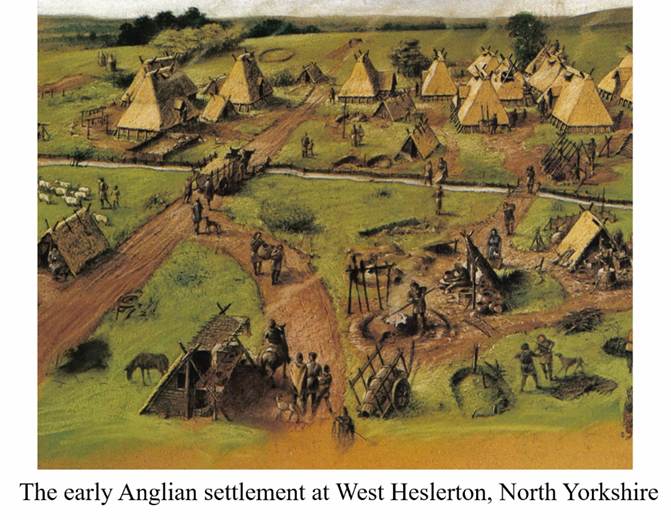
West Heslerton
North of the Yorkshire
Wolds, excavations at West Heslerton, the Anglian Village,
northeast of Malton, in the Vale of Pickering, between 1987 to 1996 have
revealed 150 houses, workshops, storage huts over a period of 200 years from
the end of Roman Britain to Anglian Northumbria. The extensive archaeology
evidences change from round houses to grubbenhausen, Germanic style structures
built over a sunken pit dug into the ground.
The settlement at West
Heslerton was not initially of significant size, but developed into a 150
building settlement by the sixth century. This was an area of fertile soil
adjacent to a navigable river, with rich supplies of fish. It therefore had
access to communication and trade. The settlement became zoned over time with a
residential area; an area for agricultural processing; and an area for the work
of craftsmen. There is no evidence of violence, no shallow graves, no
suggestion of violence to skeletal remains. The archaeology does not indicate
slaughter, violence or Germanic conquest, but rather a gradual, natural, and
peaceful change in customs over long period of time. The settlement had
probably never been very Roman in the first place.
Because
of the size and longevity of the West Heslerton community one might expect to find
evidence of territorial lordship emerging. But it is hard to see any sign of
hierarchy among West Heslerton’s organised clusters of houses, workshops, craft
areas and animal pens huddled below the former shrine – of one large housed or
central hall. The rectangular hall-type dwellings are almost all identical. In death, as in life, West Heslerton’s
population seemingly belonged in family groups of more or less equal status.
(Northumbria AD 367-867,
Max Adams and Colm O’Brien, 2025, page 31).
The archaeology suggests
an evolution of medieval settlements from waves of Germanic farmer-settlers,
rather than a physical removal of the indigenous population by invaders,
reflecting a mixing with the local British population, adopting the language and
customs of a smaller number of immigrants. These were a people susceptible to
cultural influences, but not overrun. Perhaps the wealthier Romano-Britons,
with material wealth to preserve, may have been amongst those who migrated westwards.
However the model suggested by the archaeology is of a reversion to regionalism
during the tensions of the fourth and fifth centuries, when the world shrank
inwards.
Much of the Vale of
Pickering was agriculturally active, even though the low lying land became
waterlogged. Bede said it was an area rich in grain, cattle and draught
animals. Although some Anglian lords no doubt had significant influence, the
rural population was static. Although there were no functioning towns, the population
were settled in proto villages, clusters of buildings devoted to cereal
producing and crafts. The indigenous population gained access to Rhineland
quern technology, ivory and cowrie shells, traded at beach markets along the
Yorkshire coast. The sense of continuity is reflected in the coincidence of
Bronze and Iron Age boundaries with medieval parishes north of the Wolds.
Although the climate changed a little to cooler and wetter conditions, the
human landscape did not much change between Constantine and Edwin. Markets were
temporary, perhaps opportunistic. Gatherings were seasonal and customary.
Armies were maintained by personal loyalty. Bridges were maintained where they
were crucial, but often fell into disrepair. Justice was exercised through
customary law. (The King of the North, the Life and Times of Oswald of
Northumbria, Max Adams, 2013, page 89 to
93).
The
new population distrusted the old Roman centres and began to live in rectangular
wooden houses.
The Old North
From the early fifth century CE,
the Romano-British kingdom had rapidly broken up into smaller kingdoms. There were a
very large number of small kingdoms across Britain after the Roman withdrawal (Little
Kingdoms, Alex Harvey, 2025, Pen &
Sword Books).
All
the evidence points to continuity in the landscape: there was no wholesale disruption,
such as one might expect if the entire population of what was shortly to become
South and East England had in fact changed. Most towns and cities were indeed
abandoned, but this was a process that had begun long before, in a remarkably
sudden and coordinated fashion shortly after AD 300 - a full century prior to
the Roman departure. The distinguished scholar of Roman Britain, Richard Reece,
has suggested that this was because towns in Roman Britain were an idea ahead
of their time, and that their grip on the population was at best tenuous - and
soon slipped. Whatever the explanation, and I find Reece very convincing,
Romano-British town life effectively ceased in the early 4th century and there
was a consequent rise in rural prosperity, which included the construction or
enlargement of many elaborate country houses, known to everybody today as Roman
villas. The
Anglo-Saxon invasion was more a spread of ideas. (Britain in the Middle Ages, An Archaeological History, Francis Pryor, 2007, page 21).
In time Eboracum
(York) became the centre of the British-Celtic kingdom of Ebrauc. The
kingdom faced increasing pressure and conflict from the Germanic invaders who
began settling in the coastal regions in the early fifth century. The Anglian
kingdoms of Bernicia and Deira gradually eroded Ebrauc's territory. The
last British king of Ebrauc, Gwrgant Gwron, was forced to flee
the city around 580 CE when it was captured by the Angles.

Yr Hen Ogledd (The Old North), c 550 to c 650
These were the last British kingdoms of Hen Ogledd, the Old North.
Deira and Bernicia
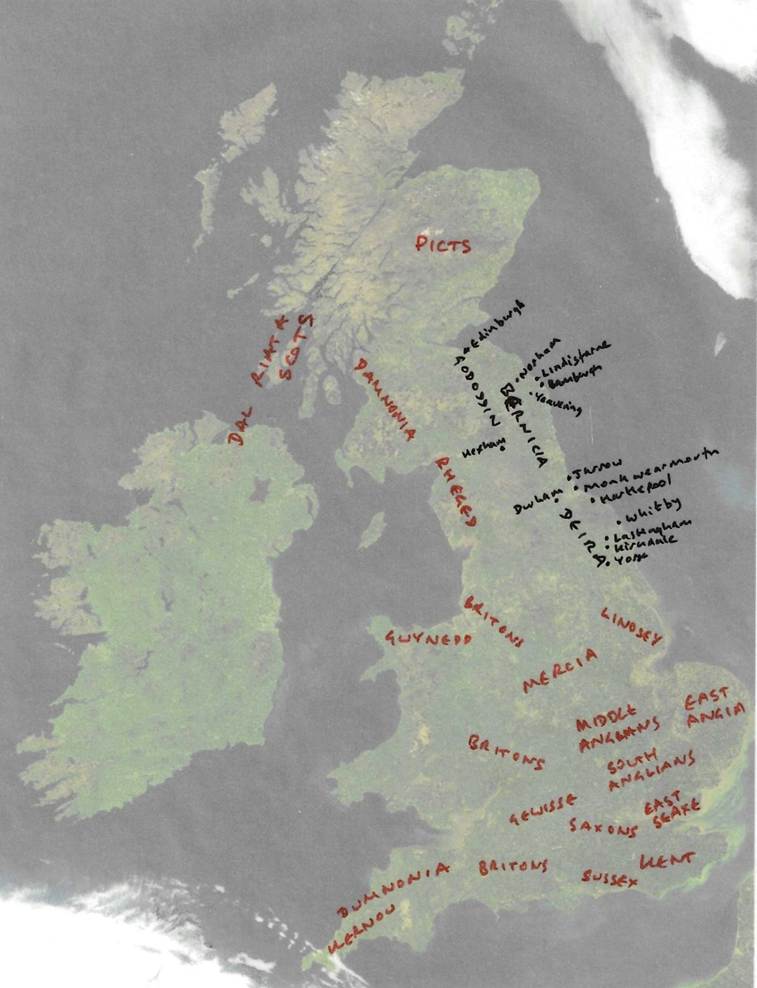
Anglo Saxon Northumbria, c 540
To the north of Deira the
territory was known as Bernicia and north of Bernicia there were the lands of
the Gododdin which stretched up to the Firth. These boundaries were fluid and
Bernicia sometimes stretched into the Goddodin lands and control over the Bernician
and Deiran lands switched over time from Deiran to Bernician control. Over time
all these lands came to be recognised as a single large kingdom, which adopted
the Old English name Norþanhymbre meaning the people or province
north of the Humber (the Northumbrians, that is, the English tribe
dwelling on the north side of the river Humber, Ecclesiastical
History,
Bede, Book 2, Chapter 9). Northumbria started to consolidate
into one kingdom in the early seventh century, when Deira and Bernicia became
dynastically united, though this was a complex process (see also Ecclesiastical
History,
Bede, Book 3, Chapter 1).
The territory of Deira comprised
the ancestral lands of folk of Ryedale and the Vale of Pickering, but from time
to time those lands were controlled by the Bernician Kings, or later merged
into Northumbria.
Over time from the late sixth century
inhumations (burials) came to replace cremation. While cremation was more
common in the fifth and early sixth centuries, inhumation grew in popularity by
the late sixth century, coinciding with broader changes in religious practices.
The move toward inhumation is often associated with the decline of older pagan
rituals and the gradual impact of Christian ideas, which favoured burial over
burning, although the shift was a complex process rather than a sudden conversion.
Although this was still a period before the conversion of Edwin in 627 CE,
inhumation allowed for the burial of whole bodies accompanied by rich grave
goods including weapons, jewellery, and vessels, which served to display the
wealth, power, and status of the deceased and their kin more explicitly than
cremation, which produced only ashes and fragmented items There are few
examples along the River Derwent and to the west, probably largely marshland. However
there are a string of cemeteries around and below the 3,200 metre contour south
of the Vale of Pickering, including West Heslerton. The Yorkshire Wolds is
one of the richest archaeological landscapes in England and the emerging
Deiran cultural identity was formed in part by ways in which burial sites
integrated communities into elements of an inherited visible landscape of
linear boundaries and burial monuments of the past, especially the round
barrows of the Bronze Age and the square barrows of the pre Roman Iron Age.
These boundaries are difficult to date but over time they formed the boundaries
of larger Medieval units of hundreds and wapentakes. (Northumbria AD 367-867,
Max Adams and Colm O’Brien, 2025, page 44).
John Robert Mortimer (1825 to 1911) and Rev William Greenwell (1820
to 1918) worked on Bronze Age barrows on the Wolds and increasingly on
secondary burials of the Deiran period. Deiran burials have tended to be found
in association with monumental features in the landscape.
By the time that Deira first appears in the
historical record, in King Edwin's reign, it is already an emergent Kingdom.
Foundation myths, which in time became embedded in genealogies recorded in the
Anglo-Saxon Chronicle, accounted for the origin of kingdoms by evoking war band
leaders who claimed descent from the God Woden and who arrived with small
groups of men to establish their rule. (Northumbria
AD 367-867, Max Adams and Colm O’Brien,
2025, page 49).
Germanic
culture
There
has been a tendency to distinguish native from Germanic culture, such as burial
forms, but the institutions of Bernicia were really a hybrid. The
population, if one wants to play the ethnicity card, were similarly hybrid with
a very strong genetic bias towards indigenous Britons and a balancing bias towards
Germanic language and mythology. The patronage of Anglian warlords ensured the
supremacy of a cultural elite. Kings generally took Germanic names.
Northumbria, like most of the Anglo Saxon Kingdoms, was a blend of
sophisticated, self-confident native institutions and people with an
invigorating German self-consciousness and vision of which the Idings are
perhaps epitomes. If the Britons described by Gildas as fleeing westwards were
real, they were probably the noble families with horses, servants and
sufficient portable wealth to survive exile in Britain. The reality of the DNA
mix of Northumbria is much more interesting. (The
King of the North, the Life and Times of Oswald of Northumbria, Max Adams, 2013, page 226 to 227).
Those
who still wished to cling to the vestiges of the Roman past, and in particular
to Christianity, would have to head west. Here, in what is now Wales and Cornwall,
were the hills and forests that Gildas said had offered the Britons refuge. These lands remained literate and amphoras
of imported wine and olive oil from the fifth and early sixth century were
found at Tintagel. Yet only a few got to indulge in the pretence that they
were still part of the Roman elite. King Arthur was the fiction of Geoffrey
of Monmouth in the twelfth century. He first appeared in the ninth century as a
dux bellorum, leader of battles. The Battle of Badon Hill, sometimes
associated with Arthur, may have been an early sixth century encounter between
Britons and Saxons. (The Anglo Saxons, A History of the Beginnings of England, Marc Morris, 2021, page 39 to 41).
Though Gildas lived at a time of relative peace, he agonised over what he saw
as a continuing military threat to the Britons from their Germanic neighbours,
and he pays tribute to those Britons who gained some military success against them
under the leadership of Ambrosious Aurelianus, naming specifically a victory at
Mount Baden, fought in the year of Gildas’ birth, 43 years before. (The Earliest English Kings, D P Kirby, 2000, page 14; De Exidio, chapters 25 and 26)
A leader of the Britons,
Ambrosius Aurelianus, was thus credited with organising and leading the native
British resistance against the invading Anglo-Saxons. He is a crucial figure in
the transition from Roman Britain to the post-Roman era and is considered by
many scholars to be a primary inspiration for the legendary King Arthur.
The Battle of Badon was
depicted as a decisive, though historically murky, late fifth to early sixth
century victory for the Romano-Britons against invading Anglo-Saxons, halting
their expansion for decades and ushering in a period of peace often linked to
the legend of King Arthur, possibly against Saxon forces led by figures like
Cerdic or Ælle.
The new Germanic rulers
saw themselves as descendants of heroic genealogies.
Poets
such as Widsith, the ideal wandering minstrel, sang their praises and long
regaled the kings of their day with heroic tales, of which the epic Beowulf is
a fine surviving example (The Earliest English Kings, D P Kirby, 2000, page 1; Chambers, R. W. 1912. Widsith: A study in Old English Heroic Legend, Cambridge: University Press, especially page 4).
Widsith is
an Old English poem consisting of 143 lines, found in the 10th-century Exeter
Book, that presents an idealised self-portrait of a Germanic scop
(minstrel or oral poet) named Widsith, which translates to far-traveller
or wide-journey. Often referred to as The Traveller's Song, it is
a foundational, though probably fictional, account of the heroic age of
Northern Europe, listing various kings, tribes, and heroes from the 4th to the
6th century. It survives only in the Exeter Book,
a manuscript of Old English poetry compiled in the late tenth century, which
contains about a sixth of all surviving Old English poetry. The poem connects English rulers to
Continental Germanic ancestors, including Offa who ruled the Angles, reinforcing
that Northumbrian, Bernician and Deiran kings would have viewed themselves as
part of a wider Germanic, rather than purely British, tradition. Widsith highlights that idealised kings, the giver
of treasures in the hall, were expected to be generous to followers and
poets. This aligns with the heroic ethos and loyalty required of Northumbrian
leaders.
Corelands
Cultural
corelands
developed across the area of Northumbria which formed husbanded zones which reflected
a cultural, social and economic unity. These included lands along the Vale
of York and in Ryedale, the Vale of Pickering and the Yorkshire Wolds.
These were generally associated with the Romano-British landscape and the
concentration of villas and productive rural settlements in the Tees Valley,
Ryedale, the Vale of Pickering and Yorkshire wolds where there had been a high
level of agricultural production. The overall picture is of a hinterland
less intensively utilised rather than abandoned, and with much local variation
(Northumbria AD 367-867, Max Adams and Colm O’Brien, 2025, page 25, 28, 29. Map
4 on page 27 shows the extent of Woodland by the time of the Domesday Book and
projects the likely corelands of Northumbrian north and south of the North York
Moors, with a likely Deiran/Bernician boundary on the Tees, though this is
debated). Brian Roberts identified a Deiran core within the East Riding
of Yorkshire, that is the wolds and Vale of Pickering, and a Bernician core in
the lower-mid Tyne basin. The lower Tyne, perhaps, the best place to get a
visual sense of these corelands. (Northumbria
AD 367-867, Max Adams and Colm O’Brien,
2025, page 41; Northumbrian Origins and Post Roman Continuity: an exploration,
B K Roberts, 2010 in Finds from the Frontier: Material Culture in the 4th
– 5th centuries, Council for Archaeology Research Report 162 pages
119 to 132).
Territorial lordship
Territorial lordship emerged at
different times in different places. In the lands north of the Humber it is
first visible to archaeologists at forts, towns and some villas. As generation
gave way to generation, centres of local power extended control over more
settlements and resources, in a process that only becomes transparent with the
earliest recording of land transfers to the church in the 7th century. Larger
territorial units came to be organised from a central lordship site and, as these
emerge, they show consistent signs of having been arranged on a duo decimal
basis, that is to say such units, as they become visible in the historical
record, often come in multiples of 6 or 12, townships or vills, under the
collective term ‘shire’. Yet this was a long process. The politics,
economics and social interplay that gave rise to what looks uncommonly like a
system in the 7th century evolved over 200 years, a dozen generations of human
life. (Northumbria AD
367-867, Max Adams and Colm O’Brien,
2025, page 31).
It seems that the earliest
Anglo-Saxon settlers had set themselves up as free, independent farmers. The freemen or ceorls
were supported by unfree dependants, who were not free and often slaves. By the
mid sixth century elite classes were seeking to advertise their superiority. (The Anglo Saxons, A History of the Beginnings
of England,
Marc Morris, 2021, page 50).
This was also a period when social
inequalities hardened. The move from a ranked society to a hierarchical
society must in some ways have been a by product of migration. Over decades
the first immigrant families did favours to help later incomers. Favours and
gratitude led to obligation. In time a few people had more wealth. Funerary
practices evidenced these inequalities. Frankish objects in Kentish
graves reveal a close association with the Franks, the dominant political group
in Gaul, that in time would morph to Francia and later France. Wearing exotic objects
and being buried with them allowed privileged families to focus their
hierarchical claims and bolster networks of friendship and exchange. (Britain after Rome, The Fall and Rise,
400 to 1070,
2011, Robin Fleming page 65 to 73).
Identity
In time elite identities
stimulated the evolution of regional identifies. The misinterpretation of an
ordered Anglo-Saxon-Jute conquest claimed later by Bede became a reality
through the collective imagination. This identity emerged in costumes. Kentish women adopted
Frankish imports, but nevertheless augmented this with Scandinavian items and
pioneered a uniquely Kentish costume. Regional dress styles emerged, so that
elite households from the same regions found people who dressed like themselves.
At the same time they probably adopted common songs, ritual observances, myths
and legends. These elite practices were
imitated by the non elite classes. When elite and ordinary folk met at feasts, held
when animals were slaughtered and produced a surplus of food which could not be
preserved by refrigeration or even by imported salt, the more humble folk
observed elite habits, dress and language. (Britain
after Rome, The Fall and Rise, 400 to 1070,
2011, Robin Fleming page 75 to 80).
By the ninth century there was a
primitive concept of an English people, gens anglorum (Latin) or Anglecynn
(Anglo Saxon) describing an amalgam of the Germanic folk with the indigenous
population and promoted by Bede in his Historia ecclesiastica gentis
Anglorum.
Dynasty
The elite families over time
started to territorialise their authority and make it heritable. A feature
of this process was an obsession with the past. In order to assert that their
control over labour and services was legitimate, they sought to claim that
their inheritance was traditional, natural and heritable establishing an
ideology of the permanence of privilege. This is reflected in the
regular legends of three ships founding new lines of dynasty, of associations
with Romulus and Remus, of stories of Horsa and Hengist. This was a reimagining
of Britain’s settlement by Germanic warlords and the creation of elaborate
genealogies. Leading families exaggerated the longevity of their dynasties.
Part of this process was the
co-option of the past. Bronze Age barrows were appropriated to strengthen
rights over farmlands. There were lavish royal burials, such as at Sutton Hoo. Yeavering was erected in a straight
line between a stone circle and a barrow suggesting the layout of the seventh
century villa regalis was determined by ancient and enigmatic
monuments.
People became associated
with territories dominated and organised by elites exemplified by place names
ending -ingas, -ing or -ham, ‘the people of *’ or ‘the place of
*’. Examples include Pickering (the people of Picer), and Hovingham
(containing both ing and ham), The folk of separate regiones became
third class rustics, whose labour and agricultural surplus could be exploited. It
now seems likely that the first examples of -ing and -ingham names date to the
late sixth century; the same moment we see signs of rapidly rising elites.
(The
Anglo Saxons, A History of the Beginnings of England, Marc Morris, 2021, page 51). This was a period far
from benign settlements, where elites were dominating their landscapes.
Stories such as Beowulf came to symbolise the new order.
There was generous entertainment at Yeavering, with large halls and elaborate
ritual practices. These became sites of the consumption of production. Whilst
the lords stayed only so long as the food lasted, small populations of slaves
and reeves remained throughout the years. Permanently settled slaves were
referred to by the Old English word wealas, meaning foreigner, and later
used to describe the Welsh. This supported a growing myth of conquest and
historical difference from the people who were owned. Reeves were free and over
saw the slave labourers.
The Anglo-Saxon poem The Seafarer is an elegy in the voice of an
old sailor who reflects on a life of hardship at sea. Despite the misery of cold,
loneliness, and danger, the speaker is drawn to the sea, contrasting its harsh
reality with the comforts of life on land. Ultimately, the poem turns to a
meditation on the transience of life and the worthlessness of earthly wealth.
The competitive
nature of relations between royal elites was explored by the anthropologist
Bronislaw Malinowski (Argonauts of the Western
Pacific, 1922, Chapter VI) whose principle
of reciprocity suggested that all gift giving had a motive and that lavish
gifts were less generous donations that expressions of power. His research on
the Trobriand Islanders revealed that exchange was driven by a calculated give
and take, where giving a gift created an implicit expectation of a future
return, making reciprocity a core part of the gift economy and ensuring social
cohesion.
Alongside the tribute centres,
hamlet style communities emerged, such as Thirlings, only three kilometres from
Yeavering, a collection of small houses,
workshops and grain storage buildings. Significant centres such as Yeavering sat at the top of a hierarchy of
settlements.
Renders grew more complex,
providing not only meat and wheat, but cheese, fodder and honey. This gave rise
to a landscape of obligation, choreographed to be provided at particular
times of the year. This reinforced identifies around local lords.
(Britain
after Rome, The Fall and Rise, 400 to 1070,
2011, Robin Fleming page 90 to 107).
Royal families
By the second half of the
sixth century CE, the elite families had started to adopt royal titles. They
transferred their former tribute centres into royal vills or villa
regalis.
In the Tribal Hidage,
Wessex was assessed at a large 100,000 hides, Mercia and East Anglia at 30,000
and Kent at 15,000. Kingdoms varied in size and the pattern
may have been that family units secured the submission of their neighbours,
enabling them to take on larger rivals, eventually styling themselves as King.
(The
Anglo Saxons, A History of the Beginnings of England, Marc Morris, 2021, page 53). The derivation of king
is the Old English cyning, which means son of the kin.
This was however an
unstable world where big kingdoms gobbled up little ones, and daughters
of victorious kings found themselves sleeping in the beds of old antagonists. The
princes were brought up by nurses and by late adolescence they were racing
horses, feasting, storytelling and drinking.
When kings took residence
in their royal vills, the estate centre teemed with people. The halls
were polyglot places with Irish, British and English speakers. Northumbrian
exiles were found in Mercian and East Anglian courts. Imported goods came from
royal Frankish estates, found as far as Dunadd in Dál Riata. However these
households had now adopted a cultural English identity. Welsh, Irish and
English Britain was very similar, but competition drove ideological difference.
By about 600
CE there were a relatively small number of elite royal families. Bede
identified 13. In reality these Kingdoms were still in a state of flux. In 600
CE Æthelbert of Kent
appears to have been the more powerful monarch, able to exercise some authority
over other kings. By the 620s, his power was waning and the kings of East Anglia
and later Northumbria came to dominate. Around 640 CE Mercia was in the
ascendency for a while.
(Britain
after Rome, The Fall and Rise, 400 to 1070,
2011, Robin Fleming page 110 to 119, 148 to 149).
The early history of
county development might go back as far as the late fifth century. In the early
twelfth century, Henry of Huntingdon (History of the English, especially Book 2), listed 7 kingdoms
(Kent, Sussex, Wessex, Essex, East Anglia, Mercia and Northumbria). Early
historians of the period lazily referred to the heptarchy. Bede had identified
other kingdoms. The reality was far more fluid (The Earliest English Kings, D P Kirby, 2000, page 4). Bede also referred to
administrative units called regiones or regions. Andrew Reynolds (Late Anglo-Saxon
England: Life and Landscape, 1999) felt these regiones
were the boundaries of smaller late sixth to seventh century sub-territories.
536 CE
The period 536 to 545 was
the coldest decade in 2,000 years (Why 536 was the worst
year to be alive, Ann Gibbons, Science, Volume
362, 2018, page 733) following an Icelandic volcanic
eruption which caused crops to fail and famine to spread.
544 CE
Bubonic plague spread
from Constantinople to Ireland and probably reached Britain.
The dual impact of famine and
plague must have produced a desperate and violent society. This may have been
an environment in which desperate people were willing to sacrifice their
independence for protection. The word lord derives from the Old English hlaford,
or bread giver. This was a world where individuals could emerge as elite
leaders. The earliest records seem to
suggest that the earliest Kings were in southern Britain – perhaps Ælle of the South Saxons; Ceawlin of the West Saxons
(later Wessex); and later Æthelberht of Kent. Kent was heavily influenced by
its close ties to the Franks. Æthelberht’s father Eormenric had a Frankish
name. Æthelberht married Bertha, as Frankish princess who practiced
Christianity. Bertha was provided with a church in the ruins of a Roman city, Durovernum,
which had come to be known as cantwaraburh, the stronghold of the
Kentish people. An ancient Roman theatre seems to have been reused for royal
ceremonial purposes.
Augustine would make use of Berta’s church of St
Martin at cantwaraburh, when he arrived in 597 CE.
Ida
547 CE
Ida, son of Eoppa,
the son of Esa, the son of Ingwy,
the son of Angenwit, Alloc, Benoc, Brand, Beldeg
and ultimately Woden, was the first known king of Bernicia (Historia Brittonum,
Nennius). His family are generally referred to as the Idings. He
arrived at Bamburgh in about 547 CE (Ecclesiastical History, Bede, Book 5, Chapter 24; Anglo Saxon Chronicle), though this is debated (for instance Northumbria AD 367-867,
Max Adams and Colm O’Brien, 2025, page 50). The Germanic
King started the sea borne settlement of the coast and is reputed to have
established an urbis regia ("royal settlement") at Bamburgh.
This was the
first record of a significant Germanic settlement in northern Britain in the Anglo
Saxon Chronicle.
Bede knew of
genealogical traditions concerning kings and he knew of the idea of descent from
Woden: he had cited the Kentish ancestry of Hengist and Horsa back to that
ancestral God. But when it came to his own Kingdom, his only reference to the
beginnings of Northumbrian kingship was a brief mention of Ida in the year 547
in the chronological aide memoire he wrote at the end of the Ecclesiastical
History. (Northumbria
AD 367-867, Max Adams and Colm O’Brien,
2025, page 114).
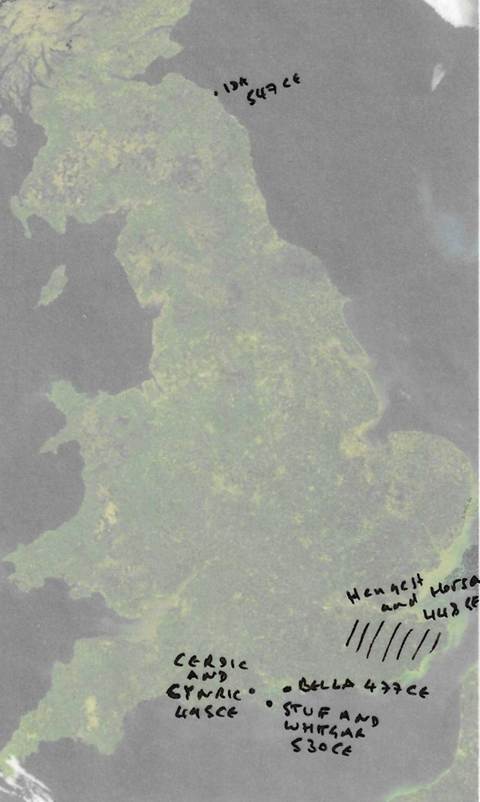
First Contact – Fifth Century Anglo-Saxon settlement referred to
in the primary written sources
Ida seems
to have established a settlement and royal settlement at Bamburgh, Ground
Zero for post Roman Northumbria. The record doesn’t suggest that this was
an invasion. Ida may have been born in Northumbria. Ida’s grandfather, Esa or
Oesa, is said to have been the first of this line who came to Britain. (The Origins of Northumbria in The Origins of Anglo-Saxon Kingdoms, Steven
Bassett, 1989, page 218; A new chronicle-fragment of early
British history, D N Dunville in English
Historical Review, Volume 88 (1973), pages 312 to 314).
Bamburgh's original name was the Brittonic Din Guaroy or Din
Guaire, an old Celtic fort. It was later renamed Bebbanburh by King
Æthelfrith after his wife, Queen Bebba, which eventually evolved into Bamburgh.
Adjacent to Bamburgh, Ynys Medcaut, Inis Metcaud or Lindisfarne was a place of Romano British significance. Brynaich
was the established British name for the region in the immediate post Roman era
of the Old North. Ida seems to have established a small settlement in and
around Bamburgh, which in time would evolve into the Kingdom of Bernicia. There
is a suggestion that the similarity between the Old English name Lindisfarne
and the people of Lindsey, the Lindissi is not coincidental and that the
Lindisfaran were migrants or refugees or otherwise mearc weardas,
border watching wolves, for those further south (Northumbria AD 367-867, Max Adams and Colm
O’Brien, 2025, page 50). Lindisfarne had probably been occupied since the Mesolithic period.
Yffi
At about the same time Yffi or Yffa was the first known king of
Deira. His family are generally referred to as the Yffings. The Yffings appear to
have established a power base initially in the Yorkshire wolds. As with Ida,
there is no reason to suppose the Yffings were recent arrivals, but they also
evolved into a distinct line in the sixth to seventh centuries.
North of the Humber, framing the east side of the Vale of York,
also prone to flooding then, as now, the chalk wolds are relatively dry, with
few permanent water courses. These uplands had long before been cleared and demarcated
by prehistoric herders; they were rich in surviving prehistoric earthworks,
burial mounts and standing stones. Beyond, the Vale of Pickering paradoxically
carries the River Derwent inland from near the coast at Filey towards the Ouse
at Selby, draining the deeply incised southern slopes of the more formidable
North Yorkshire Moors. (Northumbria
AD 367-867, Max Adams and Colm O’Brien,
2025, page 12).
These legendary founders were not more than the leaders of warbands
who Bede referred to simply as duces. Indeed the legendary Arthur was
referred to be Ninnina as dux bellorum, a leader in battle. The idea of
a king started to emerge in the seventh century; sometimes a tribal chief, the
senior aristocrat of a senior clan; or an overlord, able to subdue and conquer.
Only in the late seventh century, with the emergence of kings like Oswiu, did
Kings become heads of state who introduced a concept of statehood and kingship
that might be recognised today. (The King of the North, the Life and Times of Oswald of
Northumbria, Max Adams, 2013, page 197
to 198).
563 CE
Religion before the conversions in the East
Western Britain continued to
embrace Christianity. They were represented by a large number of early saints
such as Alban, the first recorded British martyr. By the fifth century the
British Church was hierarchical with deacons, priests and bishops. However by the
Sixth century, the driving force was monastic and British monks and
intellectuals took on an ascetic bent. They adopted a tradition of private
penance, the renunciation of homeland, avoidance of bodily excess such as
gluttony, and adopted vegetarianism and celibacy.
The adoption of
Christianity from a pagan tradition in the east of Britain was very different.
The populations of the east from East Anglia to Yorkshire were pagani. At
the time of Augustine’s arrival in 597 CE most people in eastern Britain would
have been entirely innocent of the religion in Rome.
Christianity was likely to
have been adopted by the new English kings as a status enhancing move. The
Kentish King was open to Augustine’s overtures in 597 CE for its new status
enhancing possibilities.Â
(Britain after Rome, The Fall and Rise,
400 to 1070, 2011, Robin Fleming page 120 to 140,
150 to 151).
Towards the end of the fifth century a
new form of organised Christianity began to flourish in the west of the British
Isles, monasticism which had taken hold in the Egyptian desert in the third century
CE when Christians had retreated into wilderness lands in a new form of ascetic
isolation. These hermits were referred to by the Greek monos. In time,
groups of hermits started to form small communities around a father figure, an abbas,
Aramaic for father. This new practice reached Gaul by the late fourth century
CE and then reached the British Isles where it sat most comfortably with the
rural population in Ireland. Ireland was also suitable as a place of many small
islands, such as Sceilg MhichÃl, Skellig Michael.
At the same time that monasticism was
taking hold in Ireland, the Irish Kings were colonising the western islands and
coastal areas of Scotland, creating the Kingdom of Dál Riata stretching from
northeast Ireland to western Scotland.
(The Anglo Saxons, A History of the Beginnings of England, Marc Morris, 2021, page 88 to 89)
Patrick a Romano-British aristocrat had escaped from
slavery probably to Brittany and spent many years in places where Christianity
had its deepest roots in Gaul, particularly at the cathedral city of Auxerre.
By about 460 CE Patrick was a missionary wanderer in Ireland and the western
isles. Rather than adopt the rigid organisation of the Roman church, Patrick
adopted an independent course, with obedience to local bishops. He adopted a
religion of monastic retreat from his travels in Gaul, which was adopted by the
Dál Riata kings.
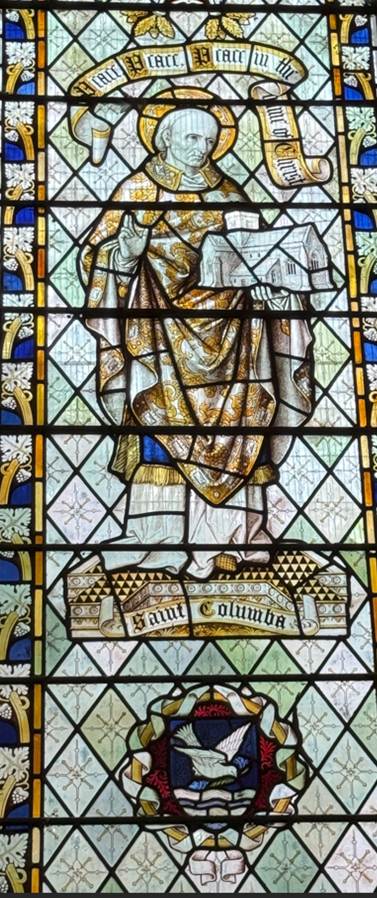 Â Â Â
   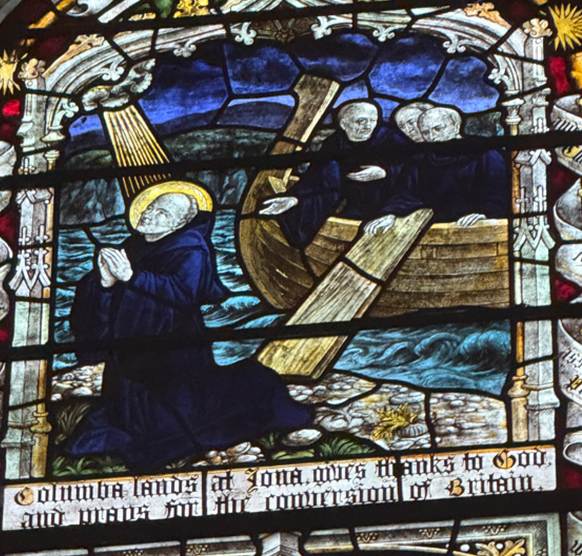
Stained Glass Windows at Helmsley Parish Church
He was charismatic and the reasons given for his
exile vary from a battle for the high kingship of Ireland to the illegal copying
of a book. He sailed in a curragh with twelve companions. The ideal for an
Irish monk was a devotional journey or peregrination, leaving his homeland and
his wealth and family.
Colle Cille was said to have landed on the
southernmost point of Iona, sometime in the 560s CE, but it
is likely that he travelled first to meet the King of Dál Riata, Conall mac Comgaill (558 to
574 CE) who probably granted him the island.
From Fergus Mór mac Eirc, King of Dalriada, would descend
a long line of Scottish Kings, and over time Dalriada came to be referred to as
Alba or Albanach, though to the Latin speaking world, the lands
came to be known by their Irish origins as Scotia, the land of the Scoti.
To the north in Shetland and to the east on the mainland, north of the Forth,
were the Gaelic speaking Picts. (Robert the Bruce, the Champion of a Nation, Stephen Spinks, 2024, page 20).
565 CE
Under
the Irish model abbots or abbesses were given land on which to form monasteries
as if they were a type of specialised secular lord and like secular lords they
gathered followers. However unlike grants to secular lords, religious figures were
given land in perpetuity. In return Colm Cille seems to have become a broker
between the Irish and Dál Riata kingdoms. In return he was given lordship over
other lands. (Northumbria
AD 367-867, Max Adams and Colm O’Brien,
2025, page 94).
In
time Iona became a mother house to monasteries of Mag Luinge on Tiree
and on Jura. He may have returned to Ireland to found monasteries at Derry and
made an expedition to the Great Glen to convert the Picts.
Iona
became, and remained throughout the 7th century, a wellspring of ecclesiastical
power, sculptural excellence, spiritual inspiration and intellectual endeavour.
A lost Iona Chronicle underpinned much of the chronology of contemporary
Ireland and northern Britain; it's abbots’ [later] interest in Northumbrian
affairs ensured lively, if intermittent, contact between their churches. The
Vita Columbae was written by one of his successes as Abbot of Iona to record
episodes, particularly miracles, from his life. (Northumbria AD 367-867,
Max Adams and Colm O’Brien, 2025, page 91).
Colm
Cille probably died in c 593 CE.
Ælla Yffing
569 CE
By the 570s, the
Bernicians were expanding into other territories, such as Rhegged.
Ælla Yffing, son of Yffi, son of Uxfrea, son of
Wisgisl, son of Westerfalca, son of Sæfugl, son of Sæbald, son of Sigegeat, son
of Swedbæg, son of Sigegar, son of Wædæg, son of Woden, was King of Deira from
569 to 588 CE.
575 CE
A conference
at Druim Cett (Limavady) in Ulster confirmed the independence of the Scottish Dál Riata from the Irish Kingdom.
By
this time there were four broad cultures across Britain – the vestigial Britons
clinging on in the west and southwest; the Dál Riata Gaelic people spread from
Ireland, the Hebrides to western Scotland; the loose confederation of Pictish
people across the rest of Scotland; and the pagan Anglo-Saxon-Jutish
people spread from Kent to Bernicia. The Saxon chiefs and kings had a hankering
to possess what had gone before them, the old Roman ideal of the regnum
Britanniae, the kingdom of the Britons, and they often built settlements on the
ruined remains of the old Romano-British towns, but in no other respect did
they remotely resemble that culture. Their political power rested on the spoils
of war and on the unwritten custom of the clan. (A History of
Britain, At the Edge of the World, 3,000 BC to AD 1603, 2009, Simon Schama, page 45).
Æthelric Iding
580 CE
Æthelric
Iding was King
of Bernicia in about 580 CE, though there is debate as to the precise year of
his succession (see Northumbria AD 367-867, Max Adams and Colm O’Brien, 2025, page 55). He faced
opposition from a coalition of Britons who sought to drive the Angle newcomers
back to the sea. His brother Theodoric was besieged on Lindisfarne which was
then called Inis
Metcaud by Urien of Rheged, but they failed to take the Bernician
stronghold.
590 CE
Bede’s narrative began in Kent, known to the Romans as Cantium.
East Kent was divided into lathes rather than shires as elsewhere. It had a
natural wealth as the garden of England and its importance was enhanced by its
geographical proximity to Frankia. Most exotic goods from the Continent arrived
through Kent and particularly through a number of ports or wics. When Kings controlled and taxed them, providing
royal protection and patronage, the wics developed into emporia.
Early emporia included Gipeswic (Ipswich), Dommoc
(Dunwich), Lundenwic (the survival of Roman Londinium) and
perhaps Eoforwic (York). (The King of the North, the Life and Times of Oswald of
Northumbria, Max Adams, 2013, page 39).
East Kent was the earliest English Kingdom. The
Kentish kings saw themselves as inheritors of the late Roman state, evidenced
by coins minted at Canterbury in the seventh century.
Gregory the Great became Pope on 3 September 590 CE.
The historian Procopius (500 to 565 CE)
described the people of Brittia as Angiloi to Pope Gregory the
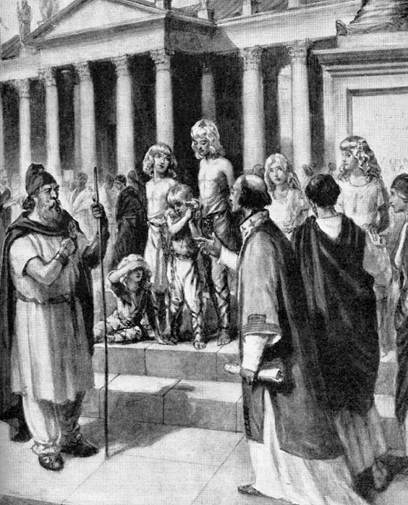
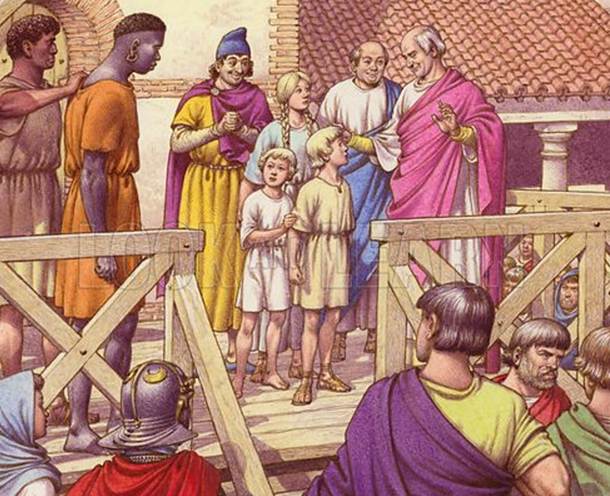
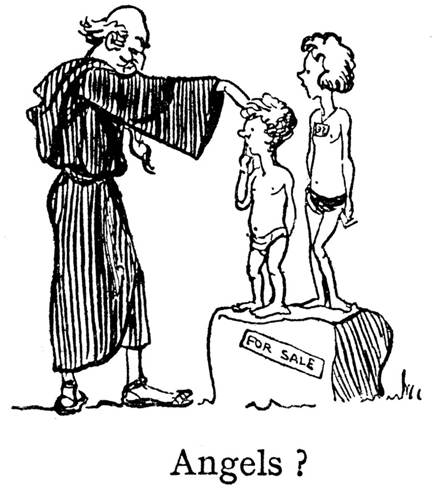
Great. Gregory had seen fair haired slaves for sale and replied that they were not
Angles, but angels. His pun is sometimes taken to define the origin of the
English and Gregory continued to class them as a single peoples.
It is significant
that Bede described the incident as Gregory’s encounter with a Deiran boy in Rome
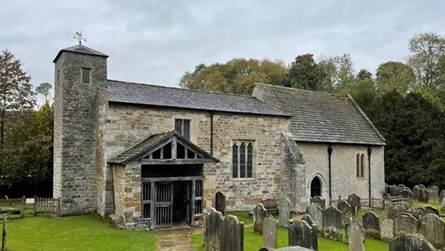
about to be sold into slavery. Kirkdale lay firmly in the Kingdom of Deira.
 Â
  Â Â
   Â Â
  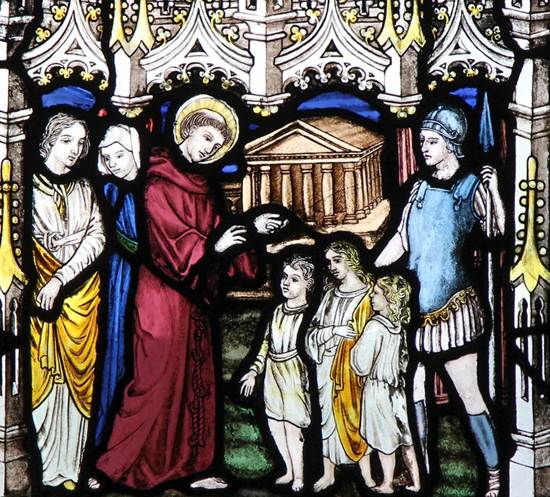
Nor must we pass by in silence the story of the blessed Gregory, handed down to us by the tradition of our ancestors, which explains his earnest care for the salvation of our nation. It is said that one day, when some merchants had lately arrived at Rome, many things were exposed for sale in the market place, and much people resorted thither to buy: Gregory himself went with the rest, and saw among other wares some boys put up for sale, of fair complexion, with pleasing countenances, and very beautiful hair. When he beheld them, he asked, it is said, from what region or country they were brought? and was told, from the island of Britain