The Farmers of Kilton
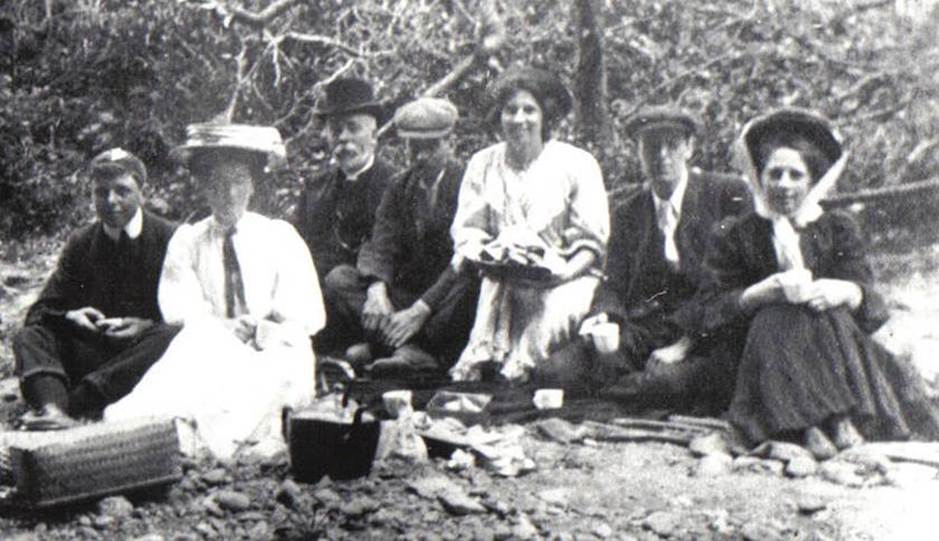
Picnic at Kilton Lodge about
1908. Vincent Grainger, Ann and Charles
Farndale, George
Farndale, Grace
Farndale, an unknown person and Mary Farndale
The First Hub
Four Hubs
Having
arrived in Cleveland, by the early eighteenth century, the family split into
four main Hubs. These were large extended families associated with different
geographical areas, from which over time, there would be further dispersal. In
the next four Acts, we will meet each of these four Hubs.
|
Act 13 – The
Farmers of Kilton The First Hub The
story of the Kilton Farndales, a family who dominated a village, since lost
to time, over two centuries |
|
Act 14 – Spreading out from Brotton and Loftus The Second Hub The
story of a substantial division of the family who spread widely across
Cleveland and beyond from Kilton, Brotton and Loftus |
|
Act 15 – The Mariners of Whitby The Third Hub
The story of the Whitby Farndales who settled in the bustling port of the eighteenth and nineteenth centuries
|
|
Act 16 –
Return to the Vale of York The Fourth Hub The
Ampleforth Farndales who returned south of the North York Moors to Yearsley
near Ampleforth |
In 1870, the Victorian author, John Farndale
imagined an emigrant on his return from a far country, saying, “No place can
equal Kilton for loveliness”, standing as it does, in the midst of sylvan
scenery, beautiful landscape and woodland scenery, and what a perfume of sweet
fragrance from wild flowers, particularly the primrose acres that would grace
any gentleman’s pleasure ground for beauty and for loveliness. Kilton, as it is
situated, is fitted only for a prince[1].
Scene 1 – Making our new home for two and a half centuries
Arrival in Kilton
By about 1705, Kilton had become the home of the Farndales
for almost two hundred and fifty years until 1940. The many branches of the
modern family are descended from the Farndales of Kilton, though some split
from it, into the other Hubs, quite early. The Kilton 1 Line and the Kilton 2 Line are significant elements of the
family history and the Kilton 3 Line also made Kilton their home. John Farndale wrote, from the perspective of Victorian Yorkshire, that My
children’s children comprise the sixth generation of our family that has lived
at Kilton estate upwards of two hundred years.
In about 1870, John Farndale (1791 to 1878) imagined his return to Kilton after years of absence when he
recalled The steward always called old J
Farndale to the vice-chair, he being old, and the oldest tenant. Farndale’s was
the most numerous family, and had lived on the estate
for many ages. Here we have chronicled something like a genealogy of a race of
people once thronging the streets of Kilton, but where are they now to be found? Many of them have gone to their everlasting
reward, yet a few, a small few, remain unto this day.[2]
The Victorian author’s great
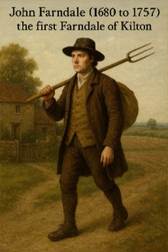
grandfather was also called John Farndale (1680 to 1757) and he was baptised at Liverton on 27 June 1680[3], the son of Nicholas and Elizabeth (nee Bennison) Farndale. We met Nicholas and Elizabeth at
the end of Act 12. The older John Farndale is where the Kilton story began.
The older John Farndale is the last
direct ancestor of all members of the Farndale family and their descendants
today. All the stories which will follow this Act relate to John’s descendants.
The whole family today can trace their stories back through John and to John’s
own ancestors, whose stories have been told in the preceding Acts. As we read
on, to follow the fortunes of a family spreading across the globe and in experience,
it is sobering to reflect on how a simple farmer and his first wife, Elizabeth
Bennison, in a small rural hamlet in North Yorkshire, who only had five
children themselves, are the origin of all the lives which followed. He is my
great x6 grandfather and that, or thereby, of all descendants of this family
alive today. If only we could travel back in time to tell him all the family
stories of those who followed. If not for the lives of John and Elizabeth, the
future adventures of the family would never have occurred. It was John’s small
family who began a process of dispersal which began to lead the wider family
down many different paths.
|
27 June 1680 to 5
October 1757 Married Elizabeth
Bennison on 5 February 1705 and Catherine Jackson on 8 October 1730 Householder of
Brotton, the first Farndale at Kilton Kilton, Brotton,
Liverton |
|
|
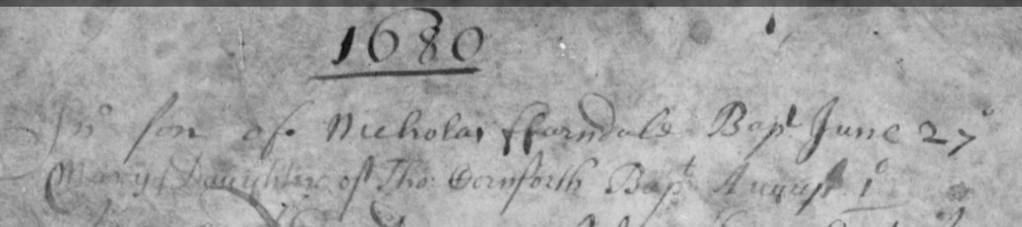
About John and Elizabeth themselves, we know comparatively
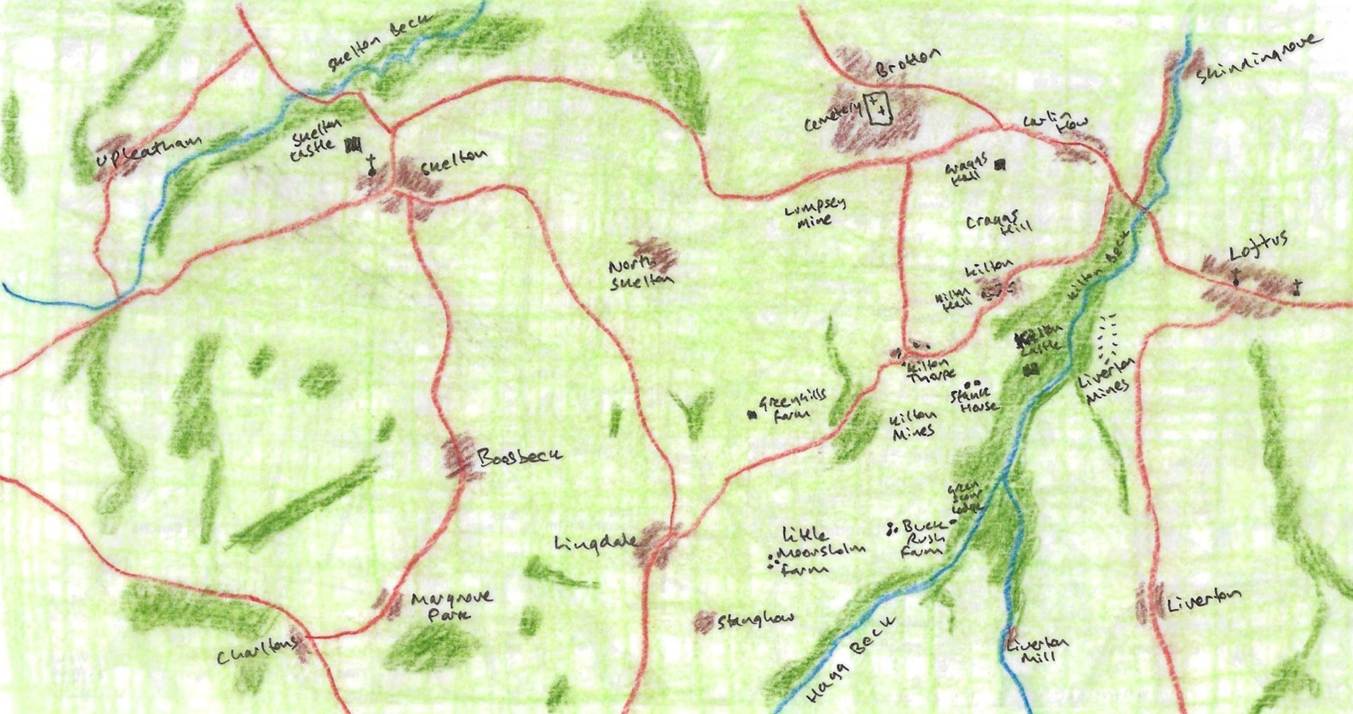
little. John Farndale married Elizabeth Bennison on 5 February 1705 at Brotton[4]. He was probably the first of the family to move to Brotton, perhaps at about the time of his
marriage to Elizabeth and their family of five were born in the Parish of Brotton. The church at Brotton served the agricultural estate lands
of Kilton. John and his family almost
certainly moved straight to the farmland of Kilton, which may have been Elizabeth Bennison’s
home. John may have initially worked on the Kilton farms, but it seems likely that
he began to farm the lands of Kilton himself, perhaps through a Bennison
inheritance. Given the association of his sons and grandsons with Craggs, it
seems most likely that he began to farm on the gentle slopes of Craggs Hill,
close to the village of Brotton and overlooking the small village of Kilton in
the valley below.
The Farndale association with Kilton probably started in around 1705 at
about the time of John and Elizabeth’s marriage.
|
|
|
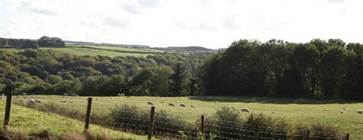
No place can equal Kilton
for loveliness |
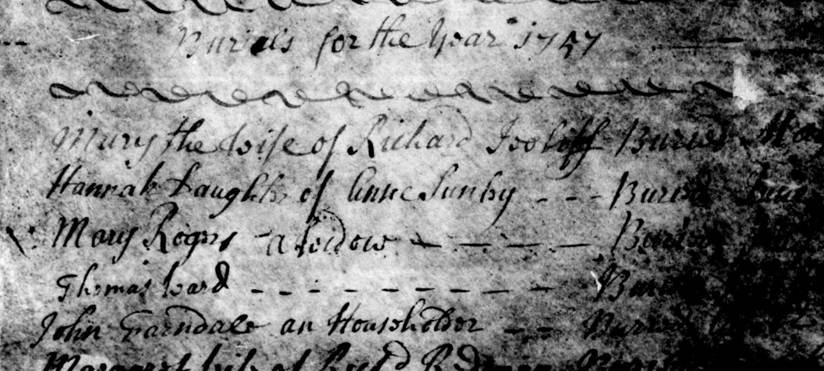
Elizabeth died in 1726 and was buried at Brotton on 1 May 1726[5]. John was 40 years old then and in 1730 he married again, to Catherine
Jackson, again at Brotton[6].
Described as a householder
when he died in 1757, then aged 77, John was buried at Brotton on 5 October 1757 at St Margaret Anglican Church, Brotton[7].
John and Elizabeth (nee Bennison)
Farndale are the direct paternal and maternal ancestors of all those who
descend through the Kilton 1 line and a direct ancestor of all the modern family. He is the last person to
whom all modern Farndales can trace their ancestry. They had three daughters, Elizabeth Farndale who must have died an infant, another Elizabeth Farndale and Ellin Farndale, and two sons, who we will meet in Scene 2.
|
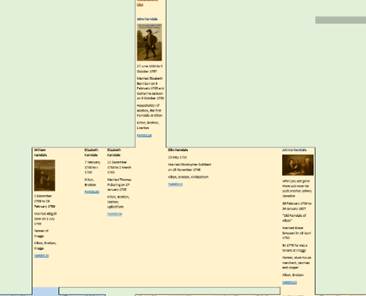
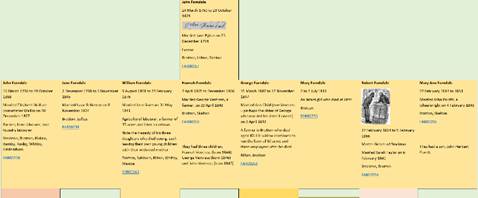
The genealogy of
the Kilton Farndales. It might help you
to have this page open as a second window, to help you follow the narrative |
Scene 2 - The Second Generation
Cabinet Makers and Cartwrights who took
their skills to Whitby and Great Ayton
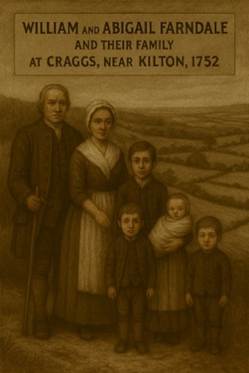
John and Elizabeth Farndale’s eldest son was William Farndale I (1708 to 1789) who married Abigail
Gear at Brotton on 3 July 1733[8]. He farmed at Craggs, which was later associated with the Craggs Line of Farndales. Craggs is the hill which overlooks
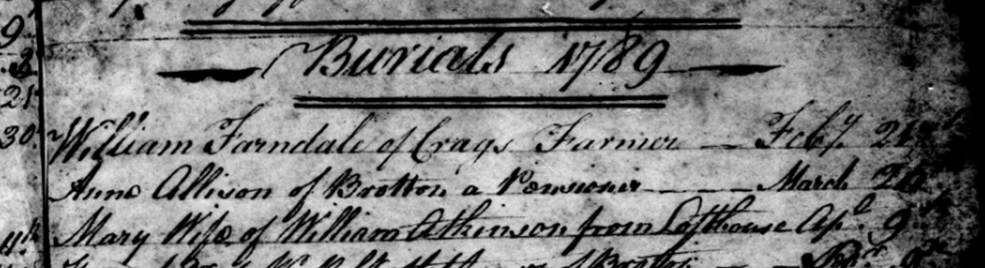
Kilton from the north. When he died in 1789, he was described as William
Farndale of Crags[9]. It seems likely that it was to Craggs, on the slopes above Kilton, and
close to Brotton, that John and Elizabeth had first settled in 1705.
|
5 December 1708 to 28 February
1789 Married Abigail Gear on 3 July
1733 Farmer of Craggs Kilton, Brotton, Craggs |
|
|
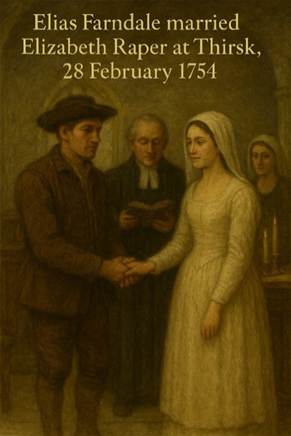
William Farndale I’s oldest son was
probably Elias Farndale who moved to Thirsk by 1754[10] and was the ancestor of the family who returned south of the North York
Moors to Yearsley near Ampleforth. We will pick up their story in Act 16.
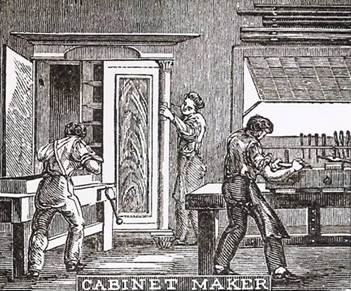
William’s second son, Samuel Farndale (1735 to 1797) became a cabinet maker in Kilton. His relative John Farndale wrote in the late eighteenth century that Near them is Samuel
Farndale and Betty, his wife, and their five children, one yet still alive,
cabinet makers and joiners, Wesleyans. They had some land, lived to be old and
died at Kilton, respected[11].
Samuel married Elizabeth (“Betty”)
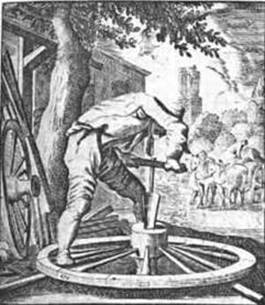
Hutton in Brotton on 23 May 1776[12] and they had four sons and three daughters[13]. Samuel and Betty’s eldest son, another William Farndale (1777 to 1863), born in Kilton Thorpe[14], became a wheelwright and cartwright[15] who was indentured as an apprentice to a joiner, Thomas Garbutt of
Nunthorpe, in 1827 and later moved to Pinchinthorpe near Guisborough and retired to Great Ayton to join his younger brothers. Their
youngest two sons were Joseph
Farndale and Henry
Farndale who both
moved to Great Ayton[16]. There is a
substantial Farndale story to be told at Great Ayton, which we will pick up in Act
22.
William Farndale I’s younger son was William Farndale II (1743 to 1777), and he became master mariner of Whitby[17] and his family were the Whitby 3 Line. His brother Samuel’s second son was
John Farndale who also moved to Whitby, settling in Eskdale to the west of the town[18] and his family were the Whitby 5 Line. Their stories will be picked up in Act 15.
The family of William Farndale I were thus a part of the Kilton community for a while, but then dispersed
to the area around Ampleforth, to Great Ayton, and to Whitby.
It was the other part of this family
who remained in Kilton for generations, and who descend from a character called
Johnny Farndale, known in his latter days as Old Farndale of Kilton.
Old Farndale of Kilton
The
youngest son of John and Elizabeth Farndale was Johnny Farndale (1724 to 1807) who was baptised at Brotton on 28 February 1724[19]. Johnny became the patriarch of the
Kilton Farndales, a regaler of smuggler tales, a farmer and a business man. He is my great x5 grandfather.
|
when you are gone there will never be
such another Johnny Farndale 28 February 1724 to 24 January 1807 Old Farndale of Kilton Married Grace Simpson 0n 16 April 1750 By 1773 he was a tenant at Craggs Farmer, alum house merchant, yeoman and cooper Kilton, Brotton |
Johnny was also known, in his dotage, as Old
Farndale of Kilton. He was a farmer and yeoman, but he was also an alum house merchant and cooper. He was a tenant of Craggs
Farm on the Wharton Estate of 31 acres in 1773[20] and by 1791 he was also farming a 83 acre plot at nearby Howe Hill[21].
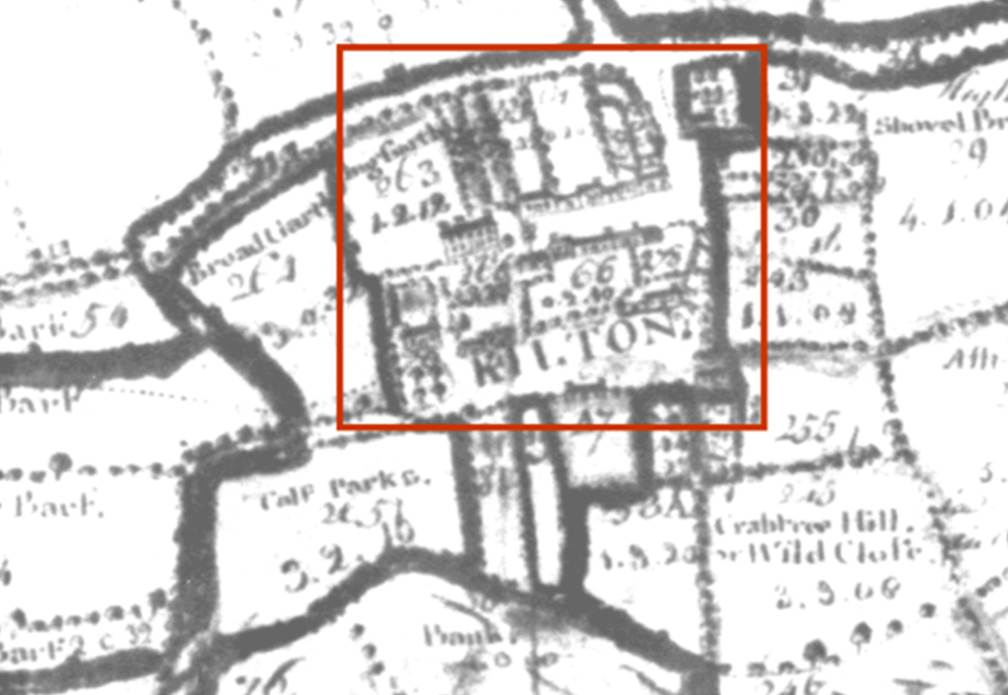
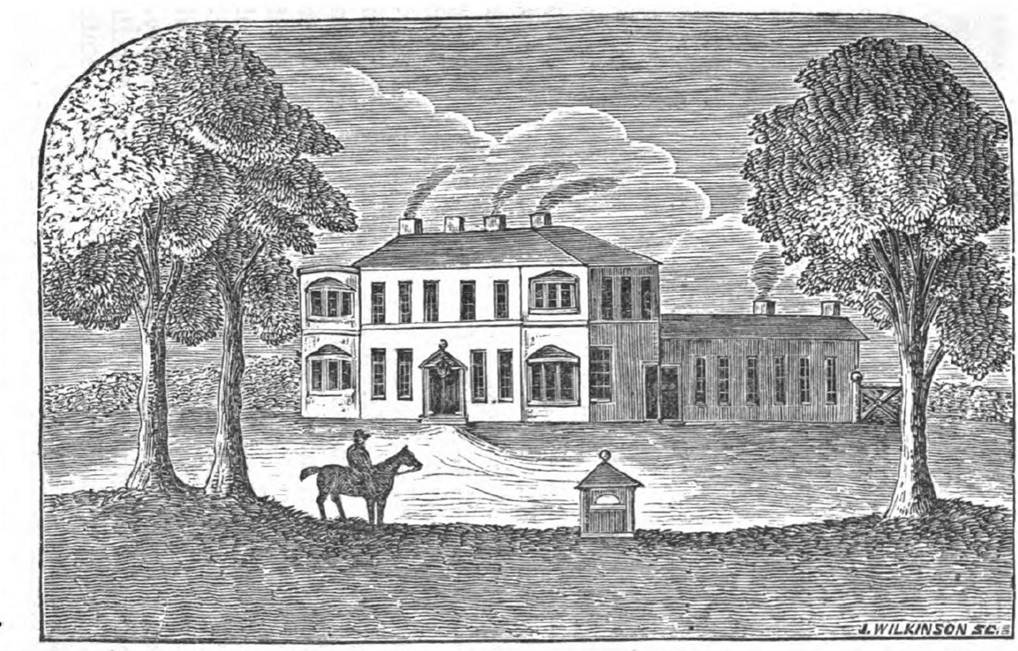
The village of Kilton from John Tullie’s Estate Plan, 1767, a bustling
village around Kilton Hall
A Sketch of Kilton Hall, from John Farndale’s
book
Kilton was farmland on the Wharton Estate of Skelton Castle. This was an
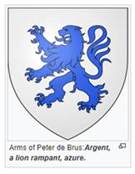
ancient estate, which was once part of the demesne of the first Robert de Brus
immediately after the Conquest. The first Robert de Brus was the first Lord of
Skelton, but through Scottish connections, also acquired lands in southwest
Scotland, as the First Lord of Annandale. His interests then split between his
elder son who retained the senior interest at Skelton and his younger son who
pursued the interests of the Scottish lands. It was from the younger son that
Robert the Bruce, King of Scotland, who defeated the English army at
Bannockburn, descended. The Scottish kings after Bruce derive from the junior
line of this Yorkshire family!
The senior line of the family retained the title to Skelton until the
thirteenth century, when the Yorkshire lands were split between four daughters.
The Skelton lands then became the interest of the Fauconberg
family, the Nevilles briefly, and then the Conyers. In the sixteenth century
the hereditary line from the de Brus family ended and the land was sold to a
wealthy fellow called Robert Trotter. A Trotter lass in the eighteenth
century married Joseph Hall, whose son John Hall became Lord of Skelton,
including the Kilton lands, during an eventful period from 1733 to 1785. So our early family would have doffed their cap to John
Hall.
John Hall was a pal of Laurence Sterne, author of the
somewhat bizarre The Life and Times of Tristram Shandy, Gentleman,
written at Shandy Hall in Coxwold. John married
Anne Stevenson and added Stevenson to his surname. John Hall-Stevenson was known for his wild parties at
the castle, with his friends including Laurence Sterne, Zachary Moore and Panty
Lascelles, who came to be collectively referred to as the Demoniacs.
John was a hypochondriac, who wouldn’t get out of bed if the east wind was
blowing. Laurence Stern had the weather vane fixed so
it would never show an east wind. Skelton Castle was in a state of disrepair at
this time, and it came to be known as Crazy Castle.
His grandson, John Hall-Stevenson, was the squire from 1786 to 1843. He
ran up large debts and was confined to Fleet Debtors prison for a spell. In 1788 he took the surname of Wharton in order to succeed to the fortune and estates of his
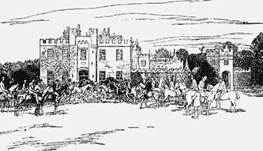
wealthy aunt, Margaret Wharton. He demolished the old Skelton Castle and
between 1788 and 1817 built a similarly named Gothic country house in its
place.
These were
the Farndales’ landlords!
|
The baronial
Yorkshire family from whom later Scottish Kings would derive and who
dominated the early history of our later Cleveland home |
|
A family tree
of the House Brus, the Lords of Skelton and Annandale, and the family
relationship to the Kings and Queens of England and Scotland |
|
A history of Skelton and its old church. |
Johnny Farndale married Grace Simpson on 16 April 1750 and they had eight
children[22].
Whilst Johnny was thus a farmer at Kilton on the Wharton estate, he also
had interests on the coast at the troublesome hamlet of Old Saltburn. The new
town of Saltburn-by-the-Sea had not yet been built. Old Saltburn was a small isolated fishing village, with a side line in
smuggling.
The author John Farndale (Johnny’s grandson) wrote all about it.
Old Saltburn around Cat Nab,
was an eighteenth century fishing village. It became a centre for smugglers. In
1856, there was a hamlet around the Ship Inn, comprising a row of houses where
farmers and fishermen lived. The authors Laurence Sterne and John Hall
Stevenson raced chariots on the sands at Saltburn, but otherwise it was but a
small fishing hamlet[23].
Here stands the conic hill,
Cat Nab, where formerly many ship loads of contraband goods, of every
description, were landed.[24].
|
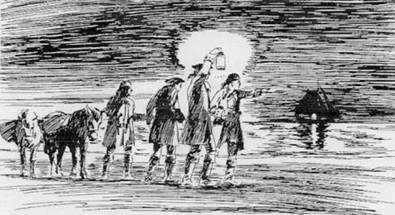
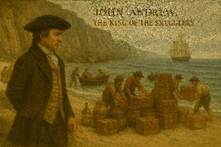
Stories of
smugglers, led by John Andrew, known as the King of the Smugglers, and the
undoubted involvement of our forebears |
|
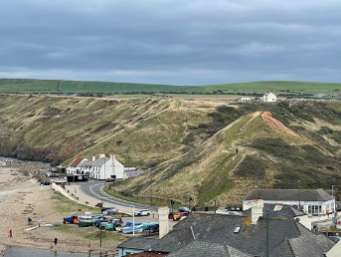
Have fish and chips in the Ship Inn, and you will be in the home of
John Andrew’s smuggling trade, once connected by an underground passage to
the white house on the hill where my great x3 grandfather lived |
|
1757 to 1835
The King of the Smugglers The grandfather of Martin Farndale’s wife Elizabeth Taylor, no
doubt in league with the c17th Farndales. When the local folk whispered Andrew’s
Cow has calved, everyone knew the goods had arrived. The wealthy John
Andrew later became master of the Cleveland Hunt He is my great x3 grandfather and will be an ancestor of many of
the modern family |
Johnny had a business as the
proprietor of an alum house at Old Saltburn whilst the lucrative sumggling
trade occupied many of the folk of the hamlet. There was a large alum house
near Cat Nab. My grandfather, who was a Kiltonian, employed many men at this
alum house, and many a merry tale I have heard him tell of smugglers and their
daring adventures and hair breadth escapes. The lime kilns and coal yard were
kept by old Mr William Cooper, whose sloop, “The Two Brothers”, was continually
employed in the coasting trade. Behind the alum house, Thomas Hutchinson, Esq.,
late of Brotton House, made an easy carriage road from Saltburn to that place,
which road will always be a lasting monument to his memory[25].
Alum deposits were up the
valley of the Saltburn Gill and the alum was dug at an alum quarry at Selby
Hagg and carried down the valley by packhorse to behind Cat Nab where it was
refined and purified at Old Saltburn and then shipped out to the Tyne or the
Thames docks. There is a field today on the road to Brotton called the Kelp
House Field where seaweed was dried and used in the refinery process and Alum
House Field originally faced Cat Nab Cottage. Cat Nab was a historic place of
refinery of alum by John’s time in the eighteenth century, though with peaks
and troughs in the market[26].
|
The alum trade
in Cleveland |
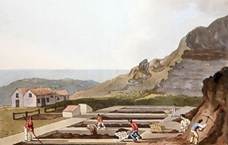
The large house at Mill Farm, that now stands between Cat Nab
and the road from Saltburn, would seem to occupy the site of the alum house
complex at Old Saltburn[27]. A map of an Estate belonging to
John Hall Stephenson Esq lying at Skelton and Brotton in Cleveland in the North
Riding of the County of York, produced in 1773 after a survey by Watson and
Seagrave shows the alum quarry at Selby Hagg, with steeping pits and a
cistern, at the place now referred to as Haggs Farm on the modern ordnance
survey map.
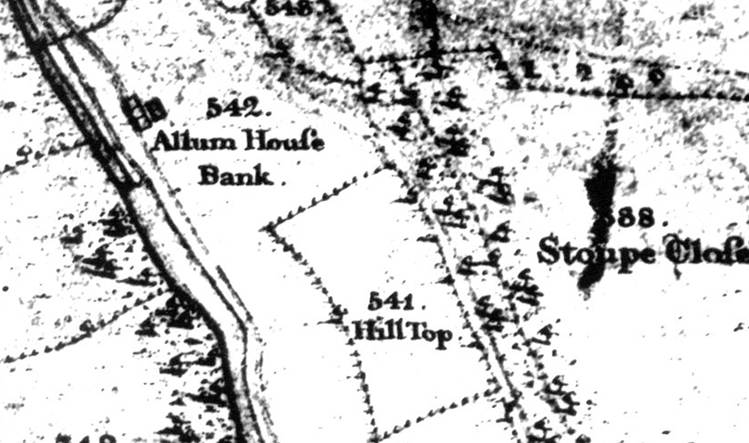
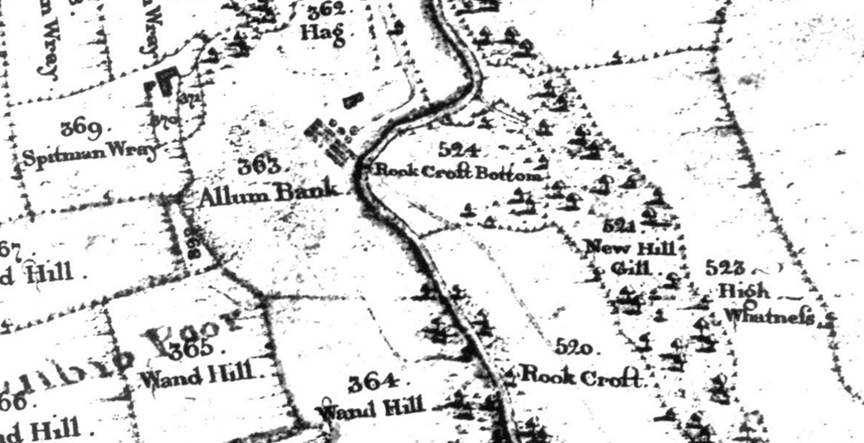
At the location of modern
Mill Farm, the Saltburn Gill met buildings at a place known as Allum House
Bank in 1773 and then continued to a large complex of buildings to the east
of Saltburn Gill Beck where it turns to join the Skelton Beck.
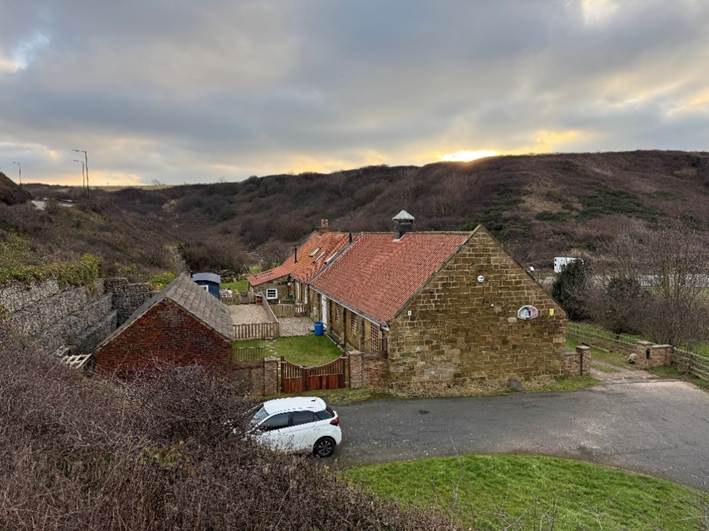
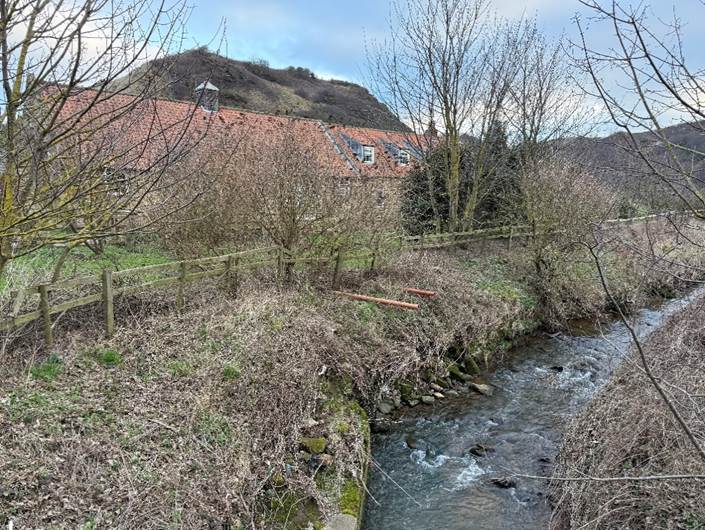
Mill
Farm, the site of Johnny Farndale’s alum works The Saltburn Gill which flows to the sea
from Selby Haggs, 2025
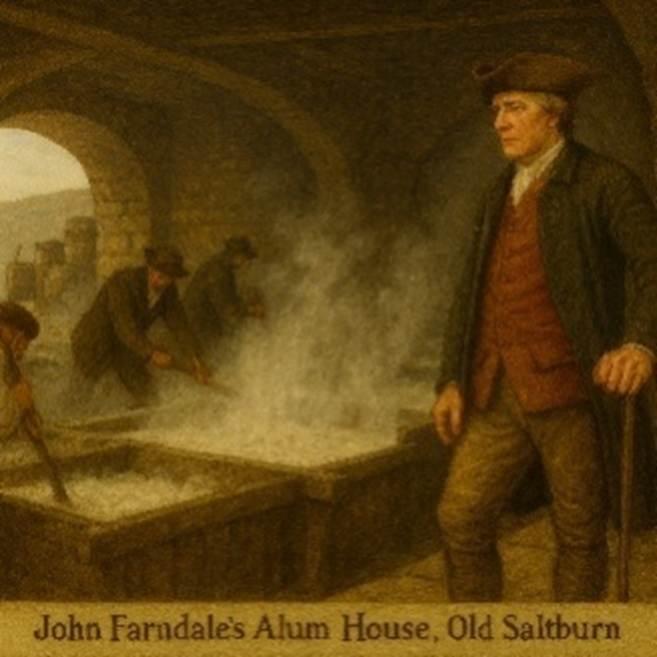
So this was the site of Johnny Farndale’s alum works.
Alum Houses such as that of
Johnny Farndale would have taken the concentrate from the alum quarry through
the next part of the process. The excess water content was evaporated off to
achieve the desired specific gravity, often measured by seeing whether an egg
would float in the substance, and alkalis were added. The alkalis caused waste
products to deposit as sediment. The remaining liquid was then run off into
large casks and crystallised. The crystals were then broken off and rinsed with
spring water and then dissolved in boiling water to create a saturated
solution. Ammonia was added to help the crystallisaton process. Originally the
ammonia was provided by human urine and there was a bouyant trade in the
product. Barrels were left in the streets of such places as Guisborough for
households to deposit their chamber pots and Thomas Chaloner of Guisborough
sold his own urine for 1d per firkin. An alternative to urine was seaweed,
which may have been used at Saltburn, although some believed seaweed to be iinferior
in its effect. The near final product was then run into very large casks to roach,
the end product being saleable crystals.
The close proximity of
Johnny’s Alum House to the Old Saltburn shoreline where ships were regularly
beached to load up at low tide, meant that the final saleable product could
quickly be exported from Johnny’s works. Sloops were beached on the low tide shore
to be loaded and then refloated at high tide for export.
Conditions for the alum
workers were generally dreadful. Particularly during the quarry phase, the
burning heaps gave off clouds of sulphorous smoke. It was sometimes like
working on an active volcano. Employees were often not paid for months on end.
The alum workers were described as poor snakes, tattered and naked, ready to
starve for want of food and clothes.
The primary use of alum was
as a mordant to fix dyes in natural fibres such as wool and linen. It was used
in dyeing and tanning and also as Epsom salts.
Johnny Farndale’s alum works
were at the periphery of the small hamlet of Old Saltburn which then comprised
a row of cottages which extended from the Ship Inn and another row of
houses on the seaward side of Cat Nab. There were a few other cottages in the
valley of the Saltburn Gill and a water wheel. There was another inn, the
Nimrod, and a third inn, the Seagull was next to the Ship Inn
and later absorbed into it. The original Ship Inn was just the snug bar
at the road end of the current pub.
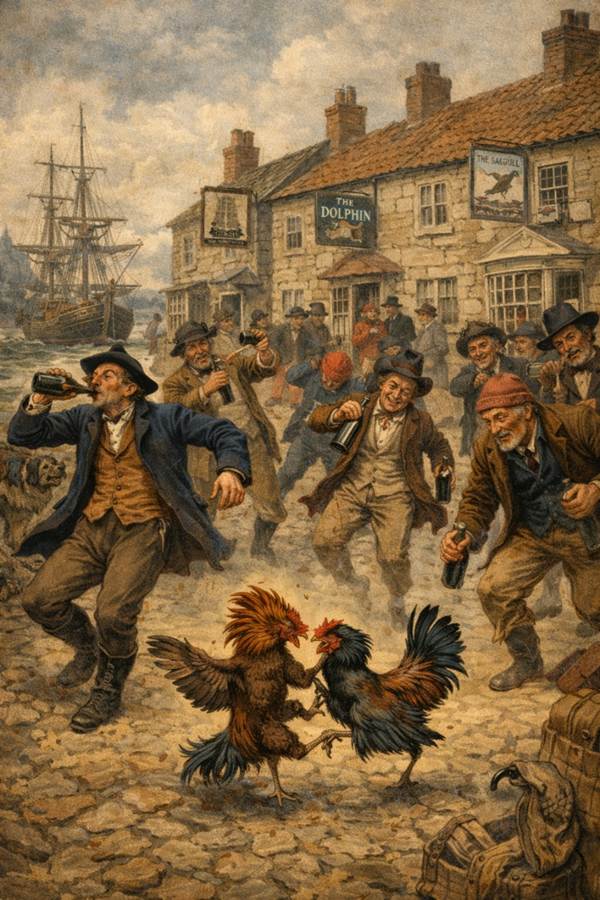
There was yet another inn called the Dolphin and many of the
cottages also sold gin for 1d per glass. Near to Cat Nab entertainment was
provided by regular cockfighting. At the Sunday fair at Old Saltburn, there
were tales of geese being driven from Brotton after having their feet dipped in
hot tar and sand. This was the wild west and the locals were often out
of control.
When the alum trade at Old Saltburn declined again from 1776,
the out of work locals embraced the enterprise of smuggling. Old Saltburn was
an inevitable centre for smuggling. There were two roads which led to Saltburn,
which were easily watched, the Brotton coach road and the Skelton road. The
ravines of Saltburn Gill, Skelton Beck and Little Dale provided hidden paths
for escape and transporting of contraband. The locals were generally related by
marriage, and the Farndales were in the heart of this community.
The most popular contraband for the smuggling trade was
brandy, which had a customs duty of 6d (or 2 ½ p) per gallon and an excise duty
of 4s 8d (23p). Together this was roughly the equivalent of the weekly wage of
a labourer. Duty was also levied on gin (geneva), tobacco, black tea (bohea),
coffee, chocolate, playing cards, linen, Flemish lace, silk, flax, oars and
spinning wheels. If a vessel could be fully laden with about 8,000 gallons of
spirit, the smugglers could evade duty amounting to about £2,000, or nealy half
a million pounds today.
Along the valley of the
Saltburn Beck, was the White House, in which John Andrew would soon have an
interest. It is said the James Cook used to call at the White
House when sailing out of Whitby, on his way to visit his
parents at Great Ayton.
Alongside smuggling, legitimate trade
was conducted by landing sloops on the shore at high tide to carry coal and
limer. William Cooper’s vessel, the Two Brothers, unloaded coal and lime
at high tide, and refloated with cargoes of oak timber, wood for props, and
hazel corf rods, which were used to make large baskets for use in the Durham coal trade.
This was a trade which Johnny Farndale engaged in.
Johnny had his fingers in many pies.
Whilst conducting his merchant enterprises at Old Saltburn, he was also a
tenant farmer probably on Cragg Hillside to the north of Kilton village. The
smuggling of Old Saltburn took place all around him, and it seems pretty likely
that Johnny had some involvement. Indeed his great grandson would marry the
grandaughter of John Andrew, the King of the Smugglers.
Johnny was a rich character, at the
heart of his community. He saw the final days of the thriving village community
of Kilton, as it transitioned from an eighteenth century rural landscape, to
large scale farming and new industry. We can imagine him returning along the
Skelton Beck from Old Saltburn, having checked up on his alum works, to his
farm on the slopes of Craggs Hill looking southward to the thriving village of
Kilton nestled around Kilton Hall. This was before census records help
illuminate the detail of his enterprise, but he must have been the employer of
a small workforce at his alum house, whilst also managing an agricultural
workforce to provide labour on the farm which he leased from the Whartons. He
must have been a formidable force in a community that has long since
disappeared.
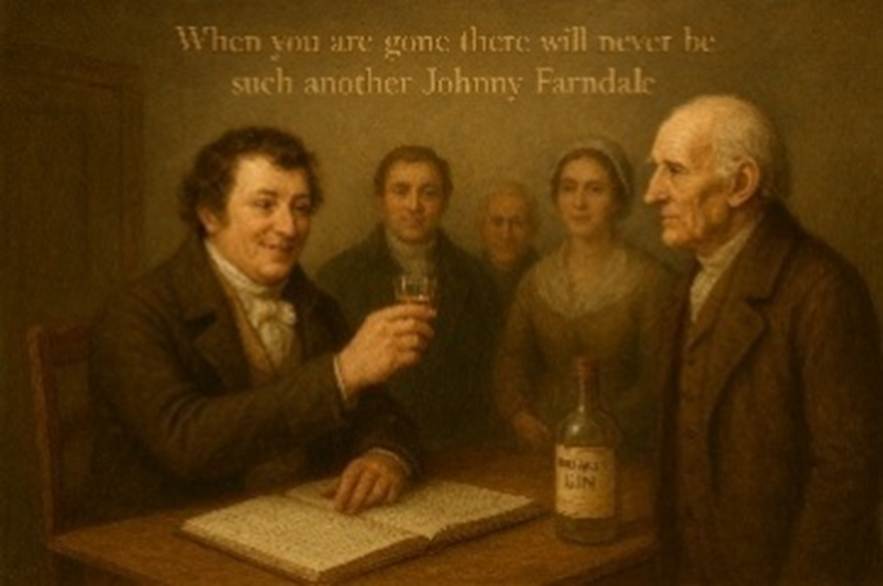
His grandson recalled that once, a year at
Christmas, they balanced accounts, over a bottle of Hollands gin, and after
eulogising each other, the squire would rise and say, “Johnny, when you are
gone, there will never be such another Johnny Farndale”.
Johnny died at Kilton Thorpe on 27 January 1807[28]. He was buried at Brotton Old
graveyard where several generations of our family can still be found.
|
Three generations of Kilton
Farndales in one place. A side trip to nearby Boosbeck and
Skelton take you to the gravestones two later generations. Take in Wensley
and you’ll find two more recent generations. Seven generations of the family
in one short drive |
|
|
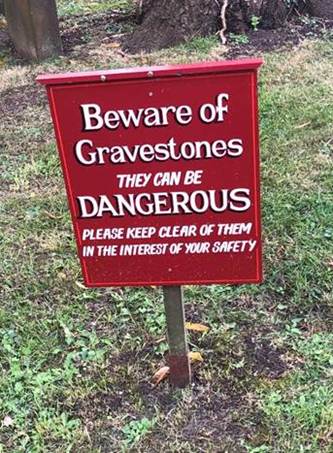
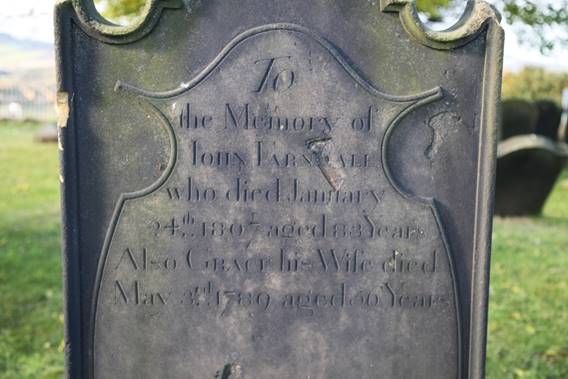
The author John Farndale imagined an
emigrant returning to Kilton via the graveyard where Johnny still lies
today, on the high ground adjacent to Craggs hill, where Johnny farmed. But
yonder on the high ridge stands Brotton Church; there was to be seen his
father’s tomb, when no time was lost ere he stood on the sepulchre of his
father. Reading words and figures chiselled out, near one hundred years before,
then moistening the green sward with tears of reflection, below where his
father’s ashes lay, then, with slow and solemn step, turned away, and took the well known lane down to Kilton, when at Howe Hill, and
seeing a towering chimney above all; what misgivings now trouble his
unprepared, peaceful breast[29].
The satanic images of the industrial
area were beginning to taint the sylvan landscape of Kilton.
Scene 3 - The Third Generation
The Older Brother
Another John Farndale (1750 to 1825) was baptised at Brotton on 24 March 1750[30], the eldest son of Johnny and Grace
Farndale. He married Jane Pybus in Skelton on 23 December 1795[31]. John sand Jane Farndale had a family of eight and we will follow their
lives in Act 14.
|
24
March 1750 to 23 October 1828 Farmer
at Brotton Married
Jane Pybus on 23 December 1794 Kilton,
Brotton, Skelton |
|
|

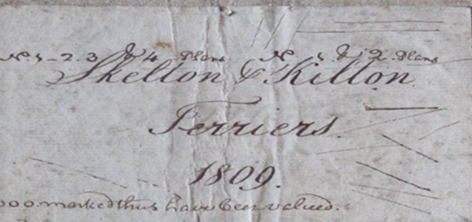
He was a busy Kilton farmer. The Skelton and Kilton Terrier in 1809 recorded his
tenanted farm. There were several farms at Kilton managed by Farndales at this
time. The Farndales dominated this place.Â
 Â
 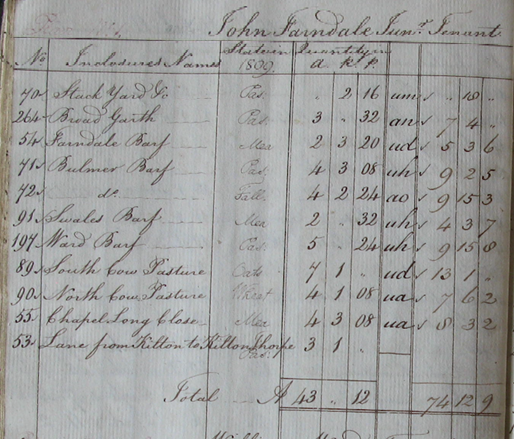
So he was farming these lands in Kilton
|
No |
Enclosure Name |
State in 1809 |
Quantity in a, r and p |
|
|
|
70 |
Stack Yard &c |
Pasture |
“, 2, 16 |
um |
“ 10 “ |
|
264 |
Broad Garth |
Pasture |
3, “, 32 |
an |
7 4 “ |
|
54 |
Farndale Barf |
Llea? Mea? |
2, 3, 20 |
ud |
5Â 3Â 6 |
|
71 |
Bulmer Barf |
Paddock |
4, 3, 08 |
uh |
9Â 2Â 5 |
|
72 |
do |
Fall |
4, 2, 24 |
ao |
9Â 15Â 3 |
|
95 |
Swales Barf |
Llea? Mea? |
2, “, 32 |
uh |
4Â 3Â 7 |
|
197 |
Ward Barf |
Pasture |
5, “, 24 |
uh |
9Â 15Â 8 |
|
89 |
South Cow Pasture |
Oats |
7, 1, “ |
ud |
13 1 “ |
|
90 |
North Cow Pasture |
Wheat |
4, 1, 08 |
ua |
7Â 6Â 2 |
|
55 |
Chapel Long Close |
Llea? Mea? |
4, 3, 08 |
ua |
8Â 3Â 2 |
|
53 |
Lane from Kilton to
Kilton Thorpe |
Pasture |
3, 1, “ |
- |
|
|
Total |
|
|
43, “, 12 |
|
74Â 12Â 9 |
John Farndale died on 23 October 1825 aged 75[32]. His will read In the Name of God Amen. I John Farndale of the Parish
of Brotton in the North Riding of Yorkshire, Farmer, make this my last Will and
Testament in manner and form as follows. First I
desire that after the period of my decease all my funeral expenses and other
debts be duly discharged by my within named Executor
out of my personal estate. I then give devise and bequeath unto my wife Jane
Farndale all the residue or remainder of my personal estate consisting of the
stock and crops of the farm which I now rent, cash, household, furniture,
linen, plate etc during the term of her life, or as long as
she continues my widow. But after the said term or widowhood my Will is that
the aforesaid personal estate be equally divided amongst my children to share
and share alike. [33]
We will pick up the story of this
family again in Act 19.
The Butcher of Brotton
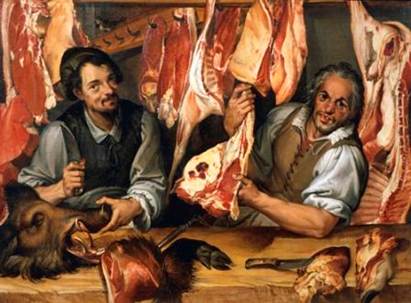
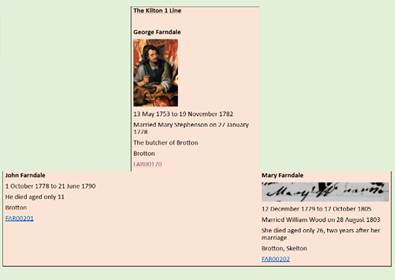
George Farndale (1753 to 1782) was the second son of Johnny and Grace
Farndale and he was baptised on Brotton on 13 May 1753[34]. He married Mary Stephenson in Skelton on 27 January 1778[35]. They had a son and daughter.
|
13 May 1753 to 19 November
1782 Married Mary Stephenson on 27
January 1778 The butcher of Brotton |
|
|
George was a butcher presumably in Kilton, though recorded in the Brotton records.
The Five Sisters
Johnny and Grace
Farndale had five daughters. Sarah Farndale died in infancy. Hannah Farndale married James Jackson in Lythe, along the coast towards Whitby. Elizabeth Farndale married Thomas Hall in Whitby. Mary Farndale married John Frankland in Skelton, a farmer of Brotton, perhaps also on the Kilton estate. Grace Farndale married William Fawcet at Skelton.
|
17
September 1755 to 27 December 1796 Married
James Jackson on 30 May 1775 Brotton,
Kilton, Whitby, Lythe |
|
17
September 1755 to 3 January 1839 Married
Thomas Hall on 21 April 1782 Brotton,
Kilton, Whitby |
|
21
January 1758 to 17 August 1759 Kilton,
Brotton |
|
26
April 1761 to 28 February 1844 Married
John Frankland on 4 February 1785 Skelton,
Brotton |
|
2
December 1764 Married
William Fawcet on 4 May 1785 Skelton,
Brotton |
The Merchant Farmer
William Farndale (1760 to 1846) was baptised at Brotton on 30 March 1760[36], the sixth child of Johnny and Grace Farndale. William married Mary Farguson at Brotton on 20 September 1789[37].
Like his dad, William was a Kilton farmer, with sidelines along the
coast.
His son was the author John Farndale, who wrote And now we come to our
grandfather and father and mother, William and Mary Farndale, and their seven
children’s birth place; farmers and merchants of wood, rods, coals, salting
bacon; church people. And those premises are held by our youngest brother, held
from generation to generation this two hundred years.
Springing from this roof may be said to be forty Farndales of this last
generation.
Round this hill (Cat Nab) my father used annually to bring thousands of corf rods to
ship for the coal pits in the north, where they are not now used. What activity
there was then at this place, when a vessel lay on the beach to be loaded with
rods, which were brought to the seaside in waggons accompanied by eight or ten
men, under the superintendence of my father, William Farndale, well known to
John Wharton Esq., who by the sale of these rods received many hundreds of
pounds[38].
Corf rods were large woven baskets, used to transport coal.
Then again I see old Cat Nab, where I have seen piled up
thousands of bundles of rods for the northern pits. I can imagine I see old William Farndale and his
host of men and wagons loading with rods the sloop, ‘The Two Brothers’ and
after dining together at David Latter’s little public house when perhaps
another vessel appeared for the next tide following and those chosen handymen
failed not to be in time and on the spot when all must be done before old
Neptune came creeping round, but oft time Billy and Farmer have been belly
deep, yet the work must be done. This was in Old Saltburn’s prosperity, when
gin could be got for a penny a glass, real Hollands. In former days there were
seen oft times near Old Saltburn, two or three luggers at a time laden with
contraband goods and the song of the crews used to be[39].
Then passing down Cattersty Creak, where many a cargo of smuggled goods have been delivered here, is a very choice place. The last I remember in this place is that Tom Webster strangled himself by carrying gin tubs round is neck. Once more I stand on Skinningrove duffy sands, where I have seen it crowded with wood and corf rods for the North by the said Wm and John Farndale. But what crowds of horses, men, and waggons, when the gin ship appeared in view. Our friends had no dealings with those Samaritan gin runners, yet they had great dealings at Skinningrove seaport, both in export and import, as well as supplying the hall of F Easterby Esq., with corn, wheat, oats, beans, butter, cheese, hams, potatoes &c, &c, and once, a year at Christmas – they balanced accounts, over a bottle of Hollands gin, and after eulogising each other, the squire would rise and say, “Johnny, when you are gone, there will never be such another Johnny Farndale